

Phillies Attempt to Trademark ‘Ring the Bell’ Rejected
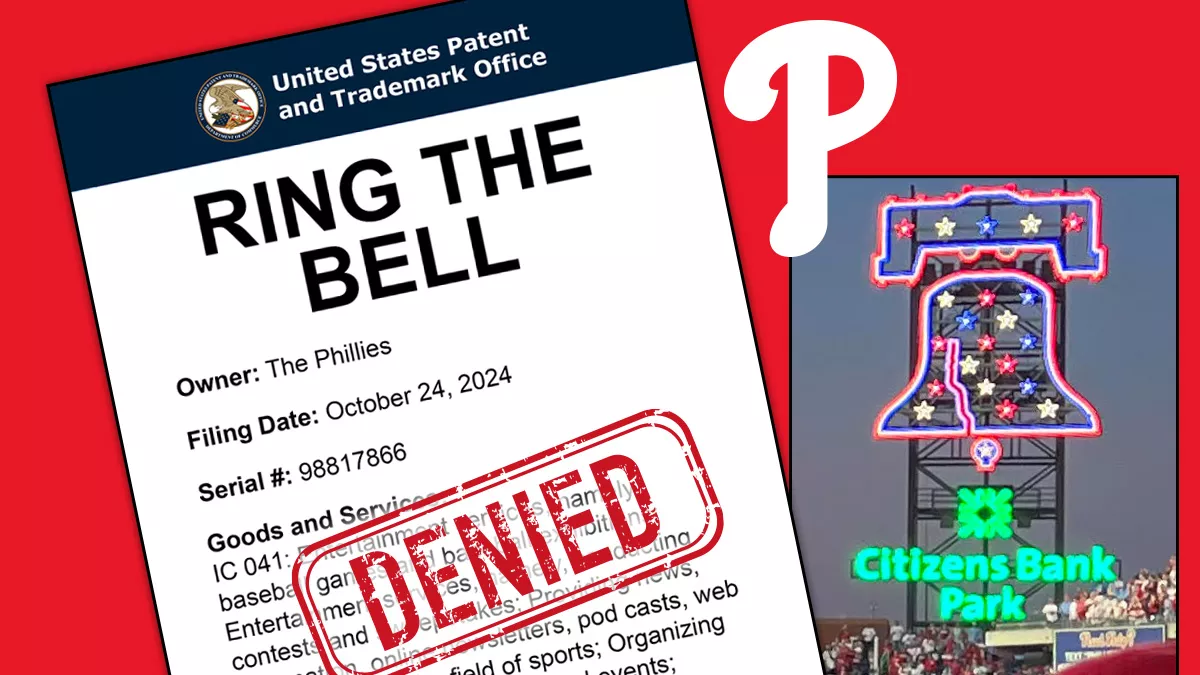
The Philadelphia Phillies have struck out (at least for now) in their bid to trademark one of the team’s signature rallying cries: ‘Ring the Bell.’
The U.S. Patent and Trademark Office (USPTO) recently refused the Phillies’ trademark application for the phrase, citing conflicts with two existing registrations that predate the team’s filing.
The tradition behind the phrase
For fans who’ve watched a game at Citizens Bank Park, “ring the bell” carries special meaning. Each time a Phillies player hits a home run or the team secures a win, the large Liberty Bell beyond center field lights up, sways, and rings in celebration.
The phrase has become synonymous with the club’s recent run of success, echoing across social media and fan merchandise alike.
Recognizing its popularity, the Phillies filed a trademark application for ‘Ring the Bell’ in October 2024, seeking protection for use in connection with baseball games and related entertainment services.

Why the USPTO said no
In March 2025, the USPTO issued a refusal, pointing to two prior registrations that could cause consumer confusion:
- ‘Ring a Bell Productions‘
This trademark is registered for entertainment services, including music, podcast, video, and television production - ‘Ring the Belle‘
This trademark is registered for arranging and hosting social entertainment events, reportedly tied to mixed martial arts promotions
At first glance, neither seems particularly close to Major League Baseball. But, as I often explain to clients, the USPTO’s review process is technical, sometimes maddeningly so.
When examining an application, the Office doesn’t compare how the marks are actually used in the real world. Instead, it reviews what’s written within the “four corners” of the applications—meaning just the wording of each mark and the descriptions of goods and services.
In this case, ‘Ring a Bell Productions’ appears to be a small production shop, helping folks create podcasts and videos.
‘Ring the Belle’ is used in connection with mixed martial arts events.
Neither has anything to do with baseball.
Nevertheless, the way trademark applications are examined, the claim for “entertainment services” for a baseball team can look similar to “entertainment services” for the two existing registrations cited by the USPTO in this case.
It’s a narrow, formalistic process that often leads to outcomes disconnected from reality.
The Phillies’ odd response
The Phillies’ attorneys filed a response on September 29, 2025, but it was unusually brief. The response consisted of just one page, with a single paragraph addressing the USPTO’s concerns.
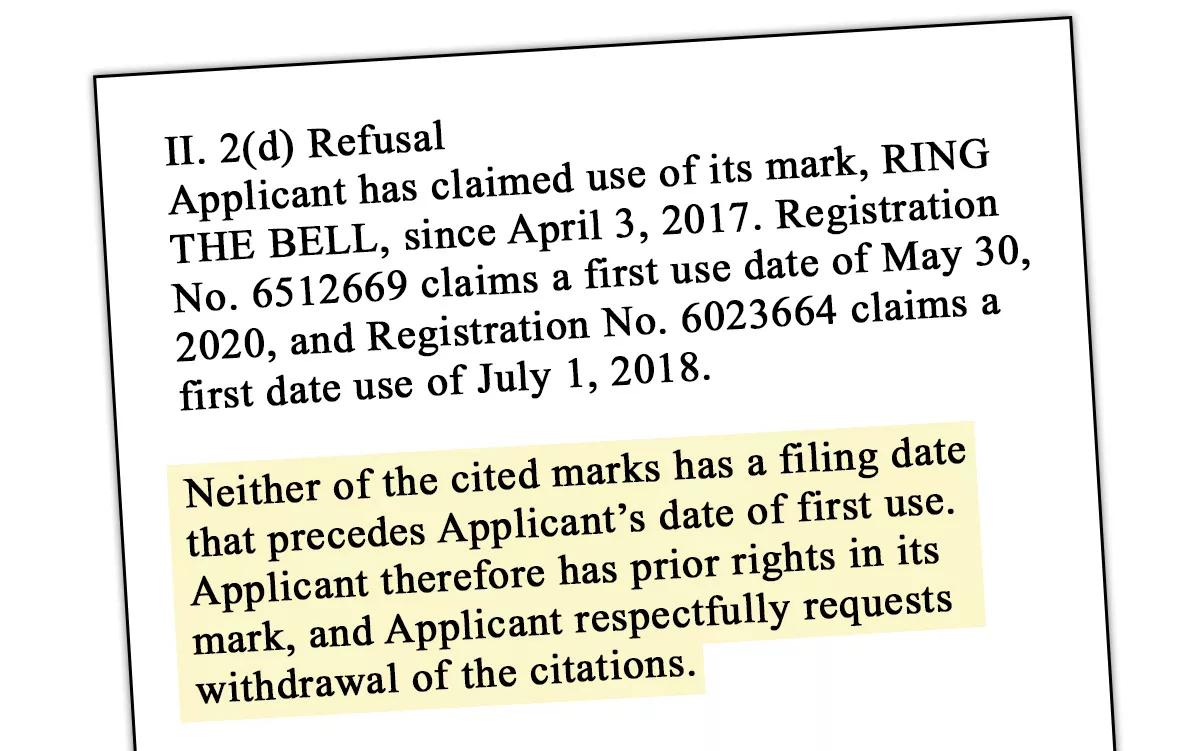
Their argument? That the Phillies had been using ‘Ring the Bell’ before either of the existing registrants claimed to have used their marks.
That might sound logical, but legally, it doesn’t work in this context. When responding to a USPTO refusal based on prior filings, by rule, you cannot claim earlier marketplace use as a way to overcome the refusal. The Office only considers filing dates, not who used the phrase first in practice.
If the Phillies truly believe they have priority, the proper path would be to oppose or cancel the conflicting registrations, not to argue priority in a response to the examining attorney. So the argument was essentially dead on arrival.
What happens next
Because that response failed to address the actual grounds for refusal, the USPTO issued a final action, meaning the team is now down to two options:
- File a petition to cancel the prior registrations on the grounds that the Phillies used the phrase first.
- Negotiate a coexistence agreement with the current registrants, who could sign an agreement stating they don’t object to the Phillies’ registration.
If such an agreement were reached and submitted, the USPTO could then allow the Phillies’ mark to proceed. However, there’s no public record that either step has been taken.
My legal analysis
From a trademark attorney’s perspective, the extremely brief response is a bit of a head-scratcher.
The team’s lawyers had several strategic options. For example, they could have submitted arguments distinguishing the marks, or initiated ‘cancellation proceedings’ against the blocking registrations. Instead, they filed a short argument that essentially guaranteed a final refusal.
The most logical explanation is that they may have engaged the owners of both blocking applications in settlement negotiations, need a little more time to wrap up settlement agreements, and wanted to avoid filing the cancellation proceedings.
It’s also possible they were up against a filing deadline, had not moved the matter forward internally, and wanted to buy additional time.
Ultimately, if the Phillies are serious about owning this mark, they’ll need to move more aggressively, either by challenging the prior registrations or negotiating coexistence. Given the strength and recognition of ‘Ring the Bell’ among fans (and the merchandising opportunities that have resulted from it), the team will likely continue to pursue the registration.
But for now, the Phillies are down in the count 0-2.

Josh Gerben, Esq.
Josh Gerben, Esq. is a nationally recognized trademark attorney and the founder of Gerben IP. Since launching the firm in 2008, he has overseen the registration of over 10,000 trademarks and handled over 1,500 trademark disputes. Josh's practice focuses on building and defending global trademark portfolios for clients. These clients include entrepreneurs, private equity-backed businesses, athletes, celebrities, and public companies. Frequently quoted by major media outlets like CNBC, CNN, The New York Times, and The Wall Street Journal, Josh is widely regarded as a leading authority in trademark law.
Do you need assistance with a trademark matter?
Contact an Attorney Today