

Trademark Dispute Erupts Between Columbia Sportswear and Columbia University
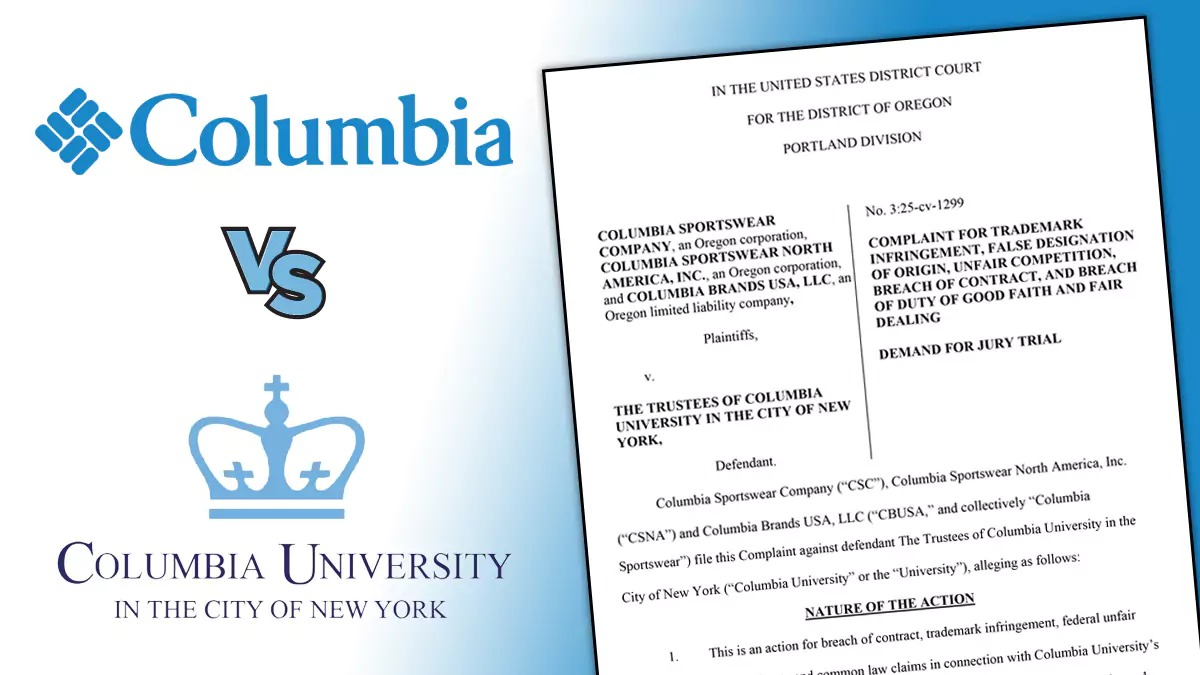
Columbia Sportswear is suing Columbia University in federal court for breach of contract and trademark infringement.
Why?
The lawsuit claims that Columbia University is selling apparel that just says “Columbia”, and Columbia Sportswear says that violates a trademark agreement the two sides reached in 2023.
The dispute began in 2023 when the University filed a trademark application to register “Columbia” for use on clothing. Columbia Sportswear objected, claiming such a registration would violate its rights. According to Columbia Sportswear, the dispute was resolved via a letter agreement dated June 13, 2023.
Under the terms of that agreement, Columbia Sportswear consented to the University using and registering the word “Columbia” on apparel, as long as it was accompanied by clearly identifiable school-related indicia. That could mean adding the word “university,” using the school’s crest, or including something like “Est. 1754.” The idea was to make sure no one confused Columbia University merchandise with Columbia Sportswear products.
Exhibit from Lawsuit Showing Infringing & Compliant Columbia Merchandise


In exchange, Columbia Sportswear agreed not to sue the Ivy League school.
But fast forward to September 2024, and Columbia Sportswear says it discovered several items in the University’s online store that broke the deal—t-shirts and hats that featured just the word “Columbia,” with no logos, crests, or other university branding. Even more frustrating for the company, some of the items were co-branded with competitors like Nike.
Exhibit from Lawsuit Showing Infringing Columbia/Nike Apparel

Columbia Sportswear reached out to the university to resolve the issue amicably. But, according to the lawsuit, the University never corrected the problem, and the merchandise is still being sold today.
Now, Columbia Sportswear is asking a court to:
- Prohibit the university from selling “Columbia” apparel without any school indicia
- Donate all remaining infringing inventory to charity.
- Turn over profits from the sale of the merchandise
- Award damages—potentially tripled if the court finds the infringement was willful
- Cover Columbia Sportswear’s attorney’s fees
In short, Columbia Sportswear isn’t trying to stop the University from selling sweatshirts. They’re simply saying: if you’re going to use the word “Columbia,” make it clear you mean the University and not the outerwear brand.
How this might play out
From a legal perspective, there are a few interesting wrinkles.
First, the agreement between the parties was made via a letter—something I’ve always approached with caution. Letter agreements can be vague or incomplete, and the University may very well challenge its enforceability. That said, if the court finds it is a valid agreement Columbia University could be on the hook for breach of contract.

Second, there’s the issue of trademark priority. Columbia University dates back to 1754—well before Columbia Sportswear was founded in 1938. If the University wanted to get aggressive, it could argue that it has senior rights to the name and potentially file a counterclaim.
Finally, if the validity of the letter agreement is successfully challenged, the University can argue that the goods in question are being sold in a very limited channel of trade (via the University’s bookstore) and this prevents any chance of consumers thinking the merchandise is associated with Columbia Sportswear.
At the end of the day, this case is not likely to turn into a high-stakes trademark brawl. It’s more of a nudge. A way for Columbia Sportswear to say, “We tried to work this out quietly. Now we need to make sure you take us seriously.”
The University likely didn’t mean to violate the agreement. But with everything else going on—lawsuits, protests, national media attention—this legal issue may have fallen through the cracks.
And really, the fix is simple: all the University has to do is slap a school crest or the word “university” next to the word “Columbia” on its merch, and the whole problem disappears.
If I had to bet, I’d say this one settles out of court. The demands are reasonable. The terms were already agreed to.
Sometimes, a little indicia goes a long way.

Josh Gerben, Esq.
Josh Gerben, Esq. is a nationally recognized trademark attorney and the founder of Gerben IP. Since launching the firm in 2008, he has overseen the registration of over 10,000 trademarks and handled over 1,500 trademark disputes. Josh's practice focuses on building and defending global trademark portfolios for clients. These clients include entrepreneurs, private equity-backed businesses, athletes, celebrities, and public companies. Frequently quoted by major media outlets like CNBC, CNN, The New York Times, and The Wall Street Journal, Josh is widely regarded as a leading authority in trademark law.
Do you need assistance with a trademark matter?
Contact an Attorney Today