

Taylor Swift Sued Over ‘The Life of a Showgirl’ Trademark as Las Vegas Performer Claims Prior Rights
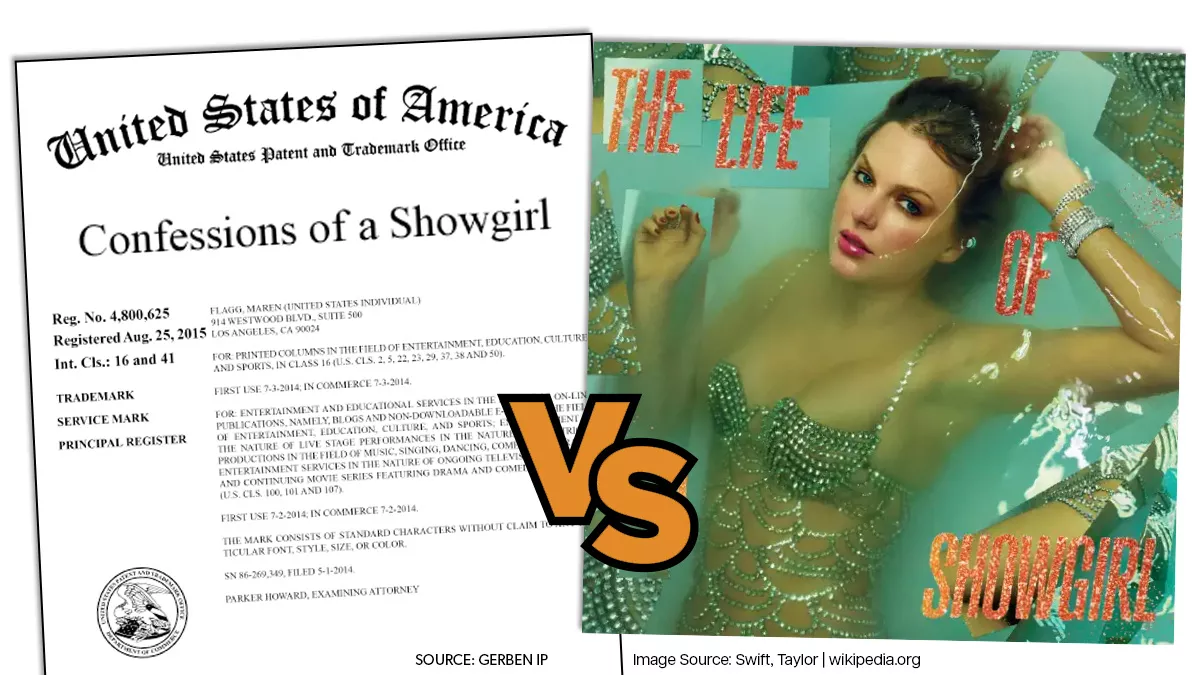
Taylor Swift has been sued for trademark infringement over the name of her latest album, ‘The Life of a Showgirl.’
The federal lawsuit was filed on March 30th by Maren Flagg, who performs under the stage name Maren Wade. The suit centers on Wade’s long-standing use of a similar trademark, ‘Confessions of a Showgirl,’ which she registered in 2013.
According to the lawsuit, Wade has spent more than a decade performing under the name at venues across the country, from New York to Las Vegas, building recognition tied to the phrase.

Wade alleges that Swift’s use of ‘The Life of a Showgirl’ is too similar in structure and presentation to her own trademark, pointing to what she describes as a shared format built around a dominant phrase “___ of a Showgirl.” In addition, Wade notes that the United States Patent and Trademark Office has already weighed in on the similarity of the marks when it refused Swift’s application because of Wade’s registration.
At the center of the lawsuit is a consumer confusion claim. Wade argues that Swift’s global reach has begun to overwhelm her smaller brand, with online searches for Wade’s mark now returning results associated with Swift. The complaint also points to social media activity in which users have used Wade’s trademarked phrase when discussing Swift’s album.

Wade is seeking a permanent injunction to prevent Swift from using the phrase, along with damages and attorneys’ fees.
How strong is the case against Swift?
While Wade has a legitimate baseline claim, I believe her chances of winning the case at trial are around 50% (at best).
The strongest argument likely available to Wade is what’s known as reverse confusion.
This is a situation where a new, more dominant brand enters the market with a similar trademark and effectively overwhelms the original trademark owner (making it difficult, if not impossible, for customers to find).
That appears to be what Wade is alleging here. Swift’s use of a similar phrase could make it difficult for Wade’s business to be found or recognized, particularly in online search results and social media.

But reverse confusion cases are notoriously difficult (and expensive) to prove.
Wade would need to show not just that the marks are similar, but that Swift’s use is actually causing confusion in the marketplace. This is something that typically requires substantial evidence, expert testimony, and expensive discovery to prove. Typically, getting a case like this to trial with strong expert testimony and evidence can easily cost $500K+.
There are also meaningful differences between the marks themselves. ‘Confessions of a Showgirl’ and ‘The Life of a Showgirl’ share a structure, but they convey different meanings and impressions. That distinction could weigh against a finding of infringement.
Another important factor is the nature of the parties’ services. Swift is a globally recognized singer-songwriter, while Wade’s performances appear to be in a different segment of the entertainment market. That separation could further reduce the likelihood that consumers would believe the two are connected.
In practice, cases like this are often resolved before trial.
This is because a settlement can be helpful to both sides.
From Wade’s perspective, she may have difficulty paying the legal and expert fees needed to make a strong case.
And from Swift’s perspective, a settlement avoids the risk of an adverse verdict.
Ultimately, if the case gets before a jury, all bets are off… as juries are notoriously unpredictable.

Josh Gerben, Esq.
Josh Gerben, Esq. is a nationally recognized trademark attorney and the founder of Gerben IP. Since launching the firm in 2008, he has overseen the registration of over 10,000 trademarks and handled over 1,500 trademark disputes. Josh's practice focuses on building and defending global trademark portfolios for clients. These clients include entrepreneurs, private equity-backed businesses, athletes, celebrities, and public companies. Frequently quoted by major media outlets like CNBC, CNN, The New York Times, and The Wall Street Journal, Josh is widely regarded as a leading authority in trademark law.
Do you need assistance with a trademark matter?
Contact an Attorney Today