

Mondelēz Sues Joyride Candy Over Lookalike Sour Patch Kids
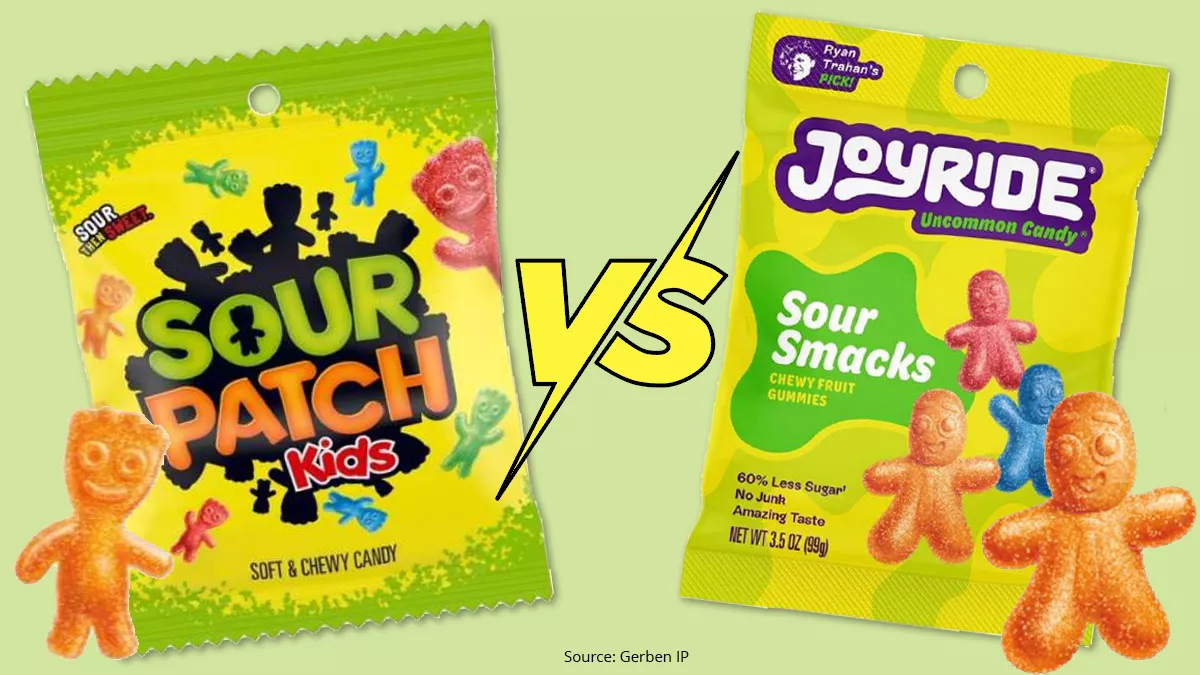
The maker of Sour Patch Kids is accusing a rival company of copying its iconic candy.
On Monday, Mondelēz International filed a federal lawsuit against Project 7, Inc., the makers of Joyride candy.
The lawsuit alleges that Joyride, a candy brand associated with YouTube personality Ryan Trahan, is deliberately adopting packaging and candy designs that closely resemble Sour Patch Kids.
Trahan, who has built a massive online following through videos documenting travel adventures and budget-conscious challenges, has become a prominent face of the Joyride brand.
Mondelēz alleges that Joyride, which it describes as a well-funded, private-equity-backed candy company, decided to steal intellectual property rather than develop its own distinct identity.
According to the lawsuit, Joyride began selling sour, chewy candies around 2020, initially using packaging and designs that were substantially different from those associated with Sour Patch Kids.
The complaint documents the evolution of Joyride’s packaging, highlighting changes made during a 2022 rebrand and another redesign in 2025.
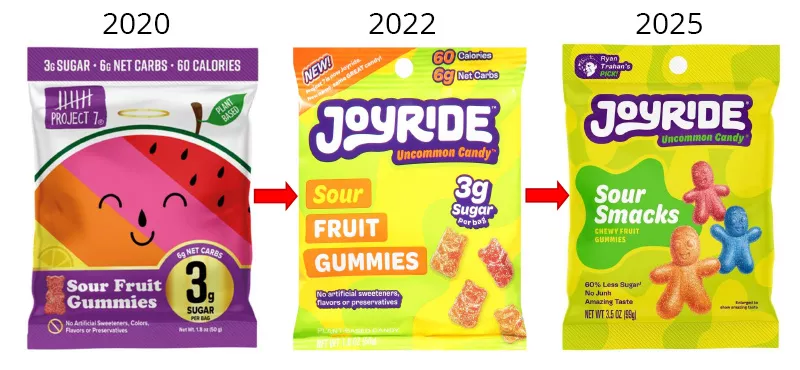
Mondelēz alleges that the most recent redesign brought Joyride’s products significantly closer to the appearance of Sour Patch Kids.
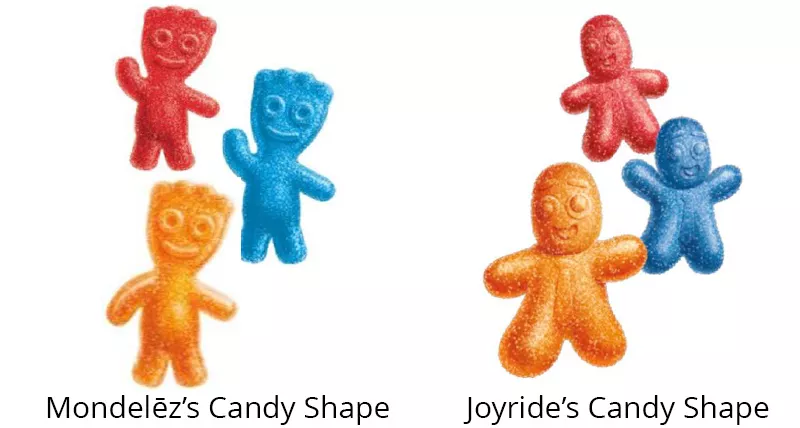
Among the alleged similarities are cartoon-like candy characters shaped roughly like children, featuring rounded limbs, smiling faces, distinctive eyes, and similar body proportions.
Mondelēz also points to the candies’ textured surfaces and the use of similar colors.
The packaging itself is another major focus of the lawsuit. According to Mondelēz, both products use prominent green and yellow coloring, accompanied by illustrations of their respective candy characters.
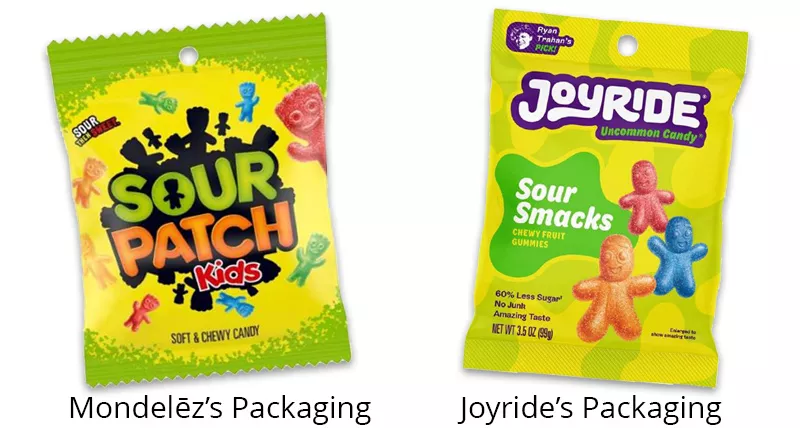
The company argues that the similarities are not coincidental, but rather part of a deliberate effort to create a competing product that benefits from consumers’ familiarity with Sour Patch Kids.
Beyond the similarities in the products themselves, Mondelēz is also pointing to Joyride’s social media activity as evidence of its alleged intentions.
The complaint alleges that Joyride repeatedly used social media to promote its goal of challenging and eventually surpassing Sour Patch Kids in popularity. In certain videos, Trahan allegedly acknowledged copying Sour Patch Kids’ social media meme format as part of an effort to surpass the brand’s Instagram following.
Mondelēz argues that these statements, combined with the evolution of Joyride’s packaging, demonstrate an intentional effort to benefit from the established Sour Patch Kids brand.
The lawsuit asks for the Court to issue an injunction preventing Joyride from continuing to sell products that infringe its trademark rights, as well as damages and attorneys’ fees.
Does Joyride’s Candy Infringe on Sour Patch Kids?
The central question in this lawsuit is relatively straightforward:
Would consumers looking at Joyride’s Sour Smacks believe the candy comes from, is affiliated with, or is somehow connected to Sour Patch Kids?
That is the fundamental legal question in a trademark infringement case.
This is a much closer case than Mondelēz might want people to believe.
One of the strongest aspects of Mondelēz’s case is that it has federally registered trademark rights protecting the distinctive shape and appearance of its Sour Patch Kids candies.
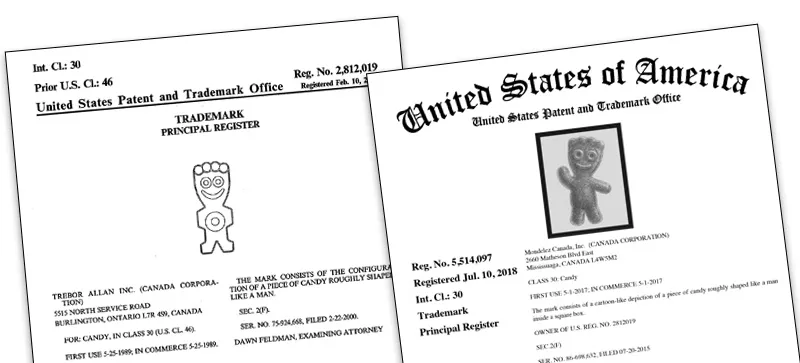
- Candy Trade Dress | Registration #: 2812019
- Candy Shape Graphic | Registration #: 5514097
That is an important advantage.
Federal trademark registrations can provide significant legal benefits when a company is attempting to enforce its rights against a competitor.
But there is a problem.
Joyride’s candy does look significantly different than Sour Patch Kids.
Yes, both products feature candy characters that are roughly human-shaped.
But having a candy shaped like a person does not automatically constitute trademark infringement. The question is whether the designs are sufficiently similar that consumers are likely to be confused about their source.
The next part of this analysis is the packaging itself.
Mondelēz relies heavily on similarities between the companies’ packaging designs.
And understandably so.
But Mondelēz does not plead any trademark registrations (nor does it appear to own any) for its packaging. In fact, Mondelēz only just filed trademark applications to protect its packaging in March of 2026.
- Colorized Packaging with Logo | Serial #: 99696064
- Colorized Packaging without Logo | Serial #: 99696059
- Black and White Packaging without Logo | Serial #: 99838325
This is likely the weakest part of Mondelēz’s case.
The lack of a registration doesn’t preclude a claim around the similarity of the packaging, but it does make it harder to prove the claim at trial.
Moreover, while the packaging does share similarities, there are also substantial differences.
Joyride places its brand name prominently at the top of the package. The words “Sour Smacks” appear in the middle, using lettering that is quite different from the distinctive Sour Patch Kids logo. The candy characters are also displayed differently.
And while there are similarities in the color schemes, the overall appearance of the packaging is not identical.
Ultimately, Joyride has done a reasonably good job of creating some visual distance between its product and Sour Patch Kids.
The question for a judge or a jury is whether that distance is enough.
So Who Wins?
Neither side has a slam dunk case.
A judge or jury could easily issue a decision for either party.
Mondelēz would seem to have a slight edge given Joyride’s public statements about purposefully competing with Sour Patch Kids.
Ultimately, this case is another example of the “dupe culture” moment we are living in. More and more companies are pushing the boundaries of how closely they can imitate successful products without violating trademark law.
Sometimes those efforts are clever competition. Sometimes they amount to infringement.
And the line between the two can be remarkably thin.
Get Ready for a Drawn-out Legal Battle
One final consideration is how long a case like this could take.
If the parties do not settle, it could easily take two years or more before the case gets to the trial stage.
There will likely be extensive discovery, document production, depositions, expert testimony, and potentially motions asking the court to resolve the case before trial.
That creates significant legal expenses for both sides.
It also creates opportunities for a negotiated settlement.
But given the companies involved, the importance of the brands, and the aggressive allegations in the complaint, I would not necessarily expect a quick resolution.

Josh Gerben, Esq.
Josh Gerben, Esq. is a nationally recognized trademark attorney and the founder of Gerben IP. Since launching the firm in 2008, he has overseen the registration of over 10,000 trademarks and handled over 1,500 trademark disputes. Josh's practice focuses on building and defending global trademark portfolios for clients. These clients include entrepreneurs, private equity-backed businesses, athletes, celebrities, and public companies. Frequently quoted by major media outlets like CNBC, CNN, The New York Times, and The Wall Street Journal, Josh is widely regarded as a leading authority in trademark law.
Do you need assistance with a trademark matter?
Contact an Attorney Today