

Kai Trump’s ‘KAI’ Trademark Opposed by UK Fashion Brand
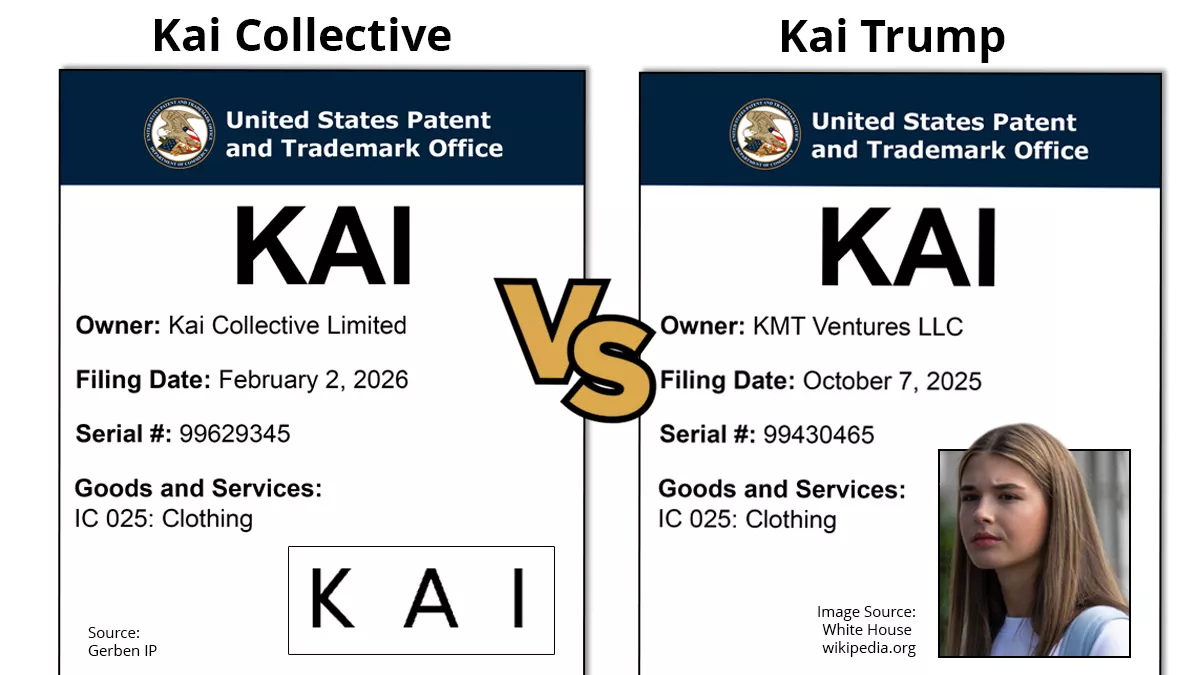
Kai Trump, the granddaughter of President Donald Trump, is facing a legal challenge in her effort to secure federal trademark protection on the name ‘KAI’ for a clothing brand.
Kai Collective, a United Kingdom-based fashion company, formally opposed Ms. Trump’s trademark application, arguing that it has been selling clothing under the ‘KAI’ name in the United States since 2021.
The ‘Notice of Opposition’ was filed by Kai Collective on July 22.
In this case, Ms. Trump filed a trademark application for ‘KAI’ on October 7, 2025. Her application indicated that she had not yet begun selling clothing under the ‘KAI’ brand.
Kai Collective did not file its own U.S. trademark application until February 2, 2026.
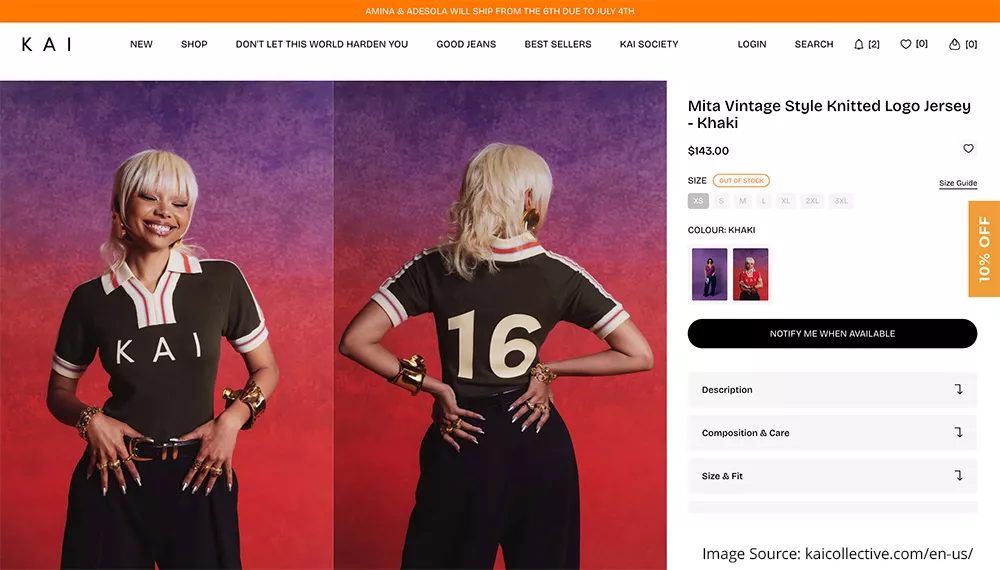
However, the UK company claims it has been selling clothing in the United States since 2021.
Kai Collective’s Website
Because the USPTO examines applications in the order they are filed, the USPTO found no conflicts when examining Ms. Trump’s application for ‘KAI’ and approved her application for registration.
Then, when the USPTO examined the Kai Collective application for ‘KAI,’ it refused the application, citing Ms. Trump’s earlier-filed application.
But the trademark registration process does not end at this stage.
After an application is approved, it enters a public opposition period during which third parties can challenge the registration if they believe they have superior legal rights.
Kai Collective exercised that right by filing a ‘Notice of Opposition,’ alleging that it has continuously sold clothing in the United States under the ‘KAI’ name since 2021.
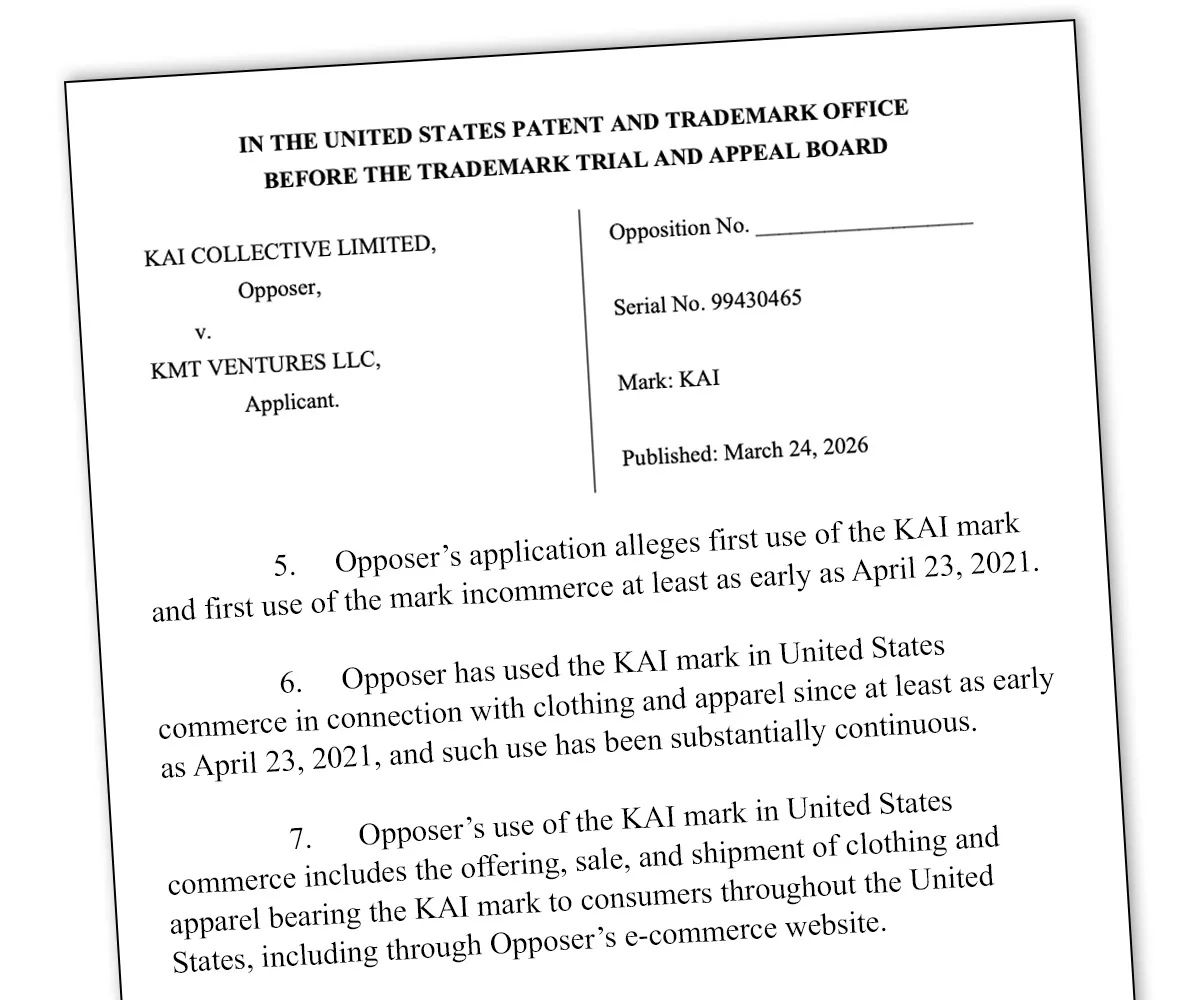
If the company can prove those allegations, it would have a strong case.
Under U.S. trademark law, businesses can acquire so-called ‘common law’ trademark rights simply by using a mark in commerce. Those rights can be used to block a trademark application filed by someone else.
Ms. Trump now has until September 20 to file an Answer to the ‘Notice of Opposition.’
After the Answer is filed, the case will enter discovery, allowing both sides to exchange evidence, request documents, and conduct depositions.
If fully litigated, the case could take as long as two years to reach a final decision, although many of these disputes resolve through negotiated settlements before trial.
Does Kai Trump Have a Strong Case?
This case is a textbook example of why trademark rights in the United States are based on ‘commercial use’ and not simply who files a trademark application first.
At first glance, Kai Trump appears to have done everything correctly. She filed her trademark application months before Kai Collective filed its own application. That earlier filing allowed her application to move through the USPTO examination process and block Kai Collective’s later-filed application.
But that’s only half of the story.
If Kai Collective can prove it has been selling clothing under the ‘KAI’ brand in the United States since 2021, it likely has priority over Ms. Trump’s application and associated rights.
Common law trademark rights arise through actual commercial use, and those rights can be used to successfully oppose a trademark application.
Ms. Trump’s application was filed on an intent-to-use basis, meaning she represented that she had not yet begun selling clothing under the mark. If that remains true and Kai Collective can establish continuous U.S. sales dating back to 2021, I believe Kai Collective would likely prevail if the case is fully litigated.
But that doesn’t necessarily mean the dispute will go that far.
Trademark oppositions (such as this one) frequently settle, particularly when both parties have business reasons to avoid prolonged litigation.
The challenge here is that both parties want the exact same mark (‘KAI’) for the exact same goods (clothing). That leaves relatively little room for coexistence unless one side narrows its branding or product offerings.
One practical solution could be for Ms. Trump to pursue protection for ‘KAI TRUMP’ rather than ‘KAI’ alone. That would create greater distinction while still allowing her to build a personal brand.
The broader lesson is one I repeat often: filing a trademark application early is important, but sometimes it isn’t enough. Before investing in a new brand, businesses should also investigate whether someone else has already established rights through marketplace use. A federal filing can provide significant advantages, but it cannot erase valid common law rights that already exist.
Notable facts about this case
Finally, a few fun facts about this case:
- The attorney representing Kai Trump is the same attorney who represents Trump Org and files all its trademarks.
- This appears to be Kai Trump’s first trademark application. She has over 3 million followers on Instagram and appears to be taking a page out of her grandfather’s playbook when it comes to building a personal brand.

Josh Gerben, Esq.
Josh Gerben, Esq. is a nationally recognized trademark attorney and the founder of Gerben IP. Since launching the firm in 2008, he has overseen the registration of over 10,000 trademarks and handled over 1,500 trademark disputes. Josh's practice focuses on building and defending global trademark portfolios for clients. These clients include entrepreneurs, private equity-backed businesses, athletes, celebrities, and public companies. Frequently quoted by major media outlets like CNBC, CNN, The New York Times, and The Wall Street Journal, Josh is widely regarded as a leading authority in trademark law.
Do you need assistance with a trademark matter?
Contact an Attorney Today