

‘Hot Girls Read’ Trademark Owner Surrenders Registration Following Backlash
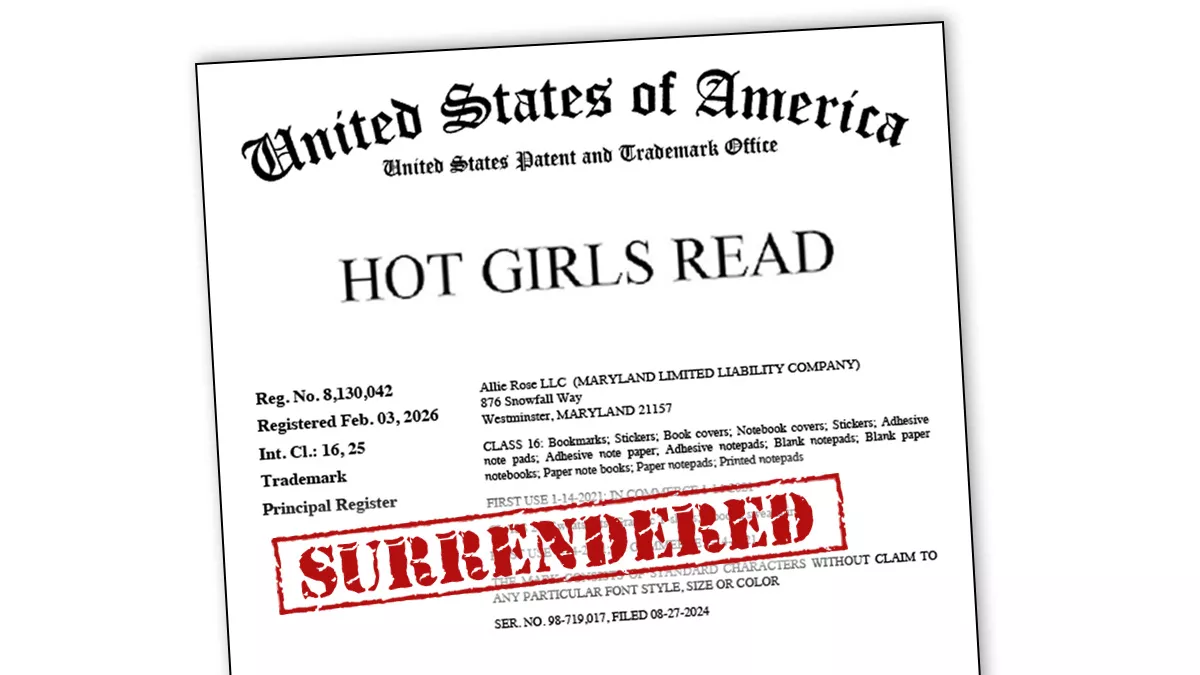
The owner of the federally registered ‘Hot Girls Read’ trademark has formally surrendered the trademark registration following widespread criticism that the phrase should not be owned by a single individual.
Ali Mitrovich, the owner of the mark, announced the decision in an Instagram post, stating that she had withdrawn the trademark and wanted to apologize to members of the small business community who felt harmed by the registration effort.
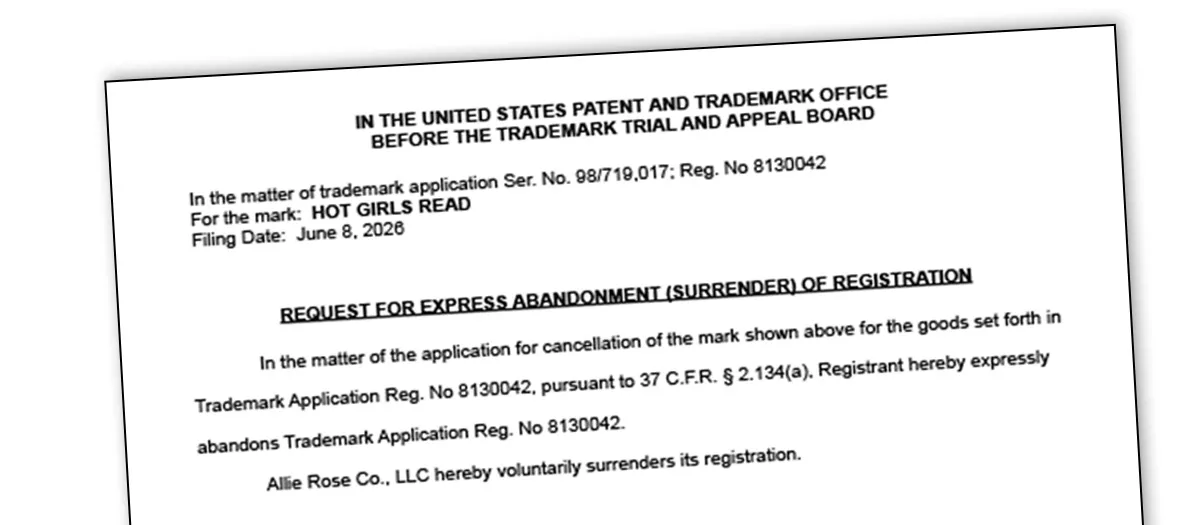
Documents filed with the U.S. Patent and Trademark Office confirm that the registration has been expressly abandoned.
The controversy emerged after concerns spread online that the registration could be used to prevent bookstores, book clubs, creators, and other businesses from using the popular phrase ‘Hot Girls Read’ on merchandise and promotional materials.
In her statement, Mitrovich said she never intended to harm anyone and expressed regret for the impact the trademark registration had on others.
The dispute quickly became a flashpoint in a broader debate over trademark law and whether widely used internet phrases can be owned by a single individual or company.
Why ‘Hot Girls Read’ Was Always a Difficult Trademark to Own
This case highlights one of the most misunderstood principles of trademark law:
A trademark registration is only enforceable if it helps identify the source of goods or services. Once a phrase becomes a part of everyday culture, it can no longer “function” as a trademark.
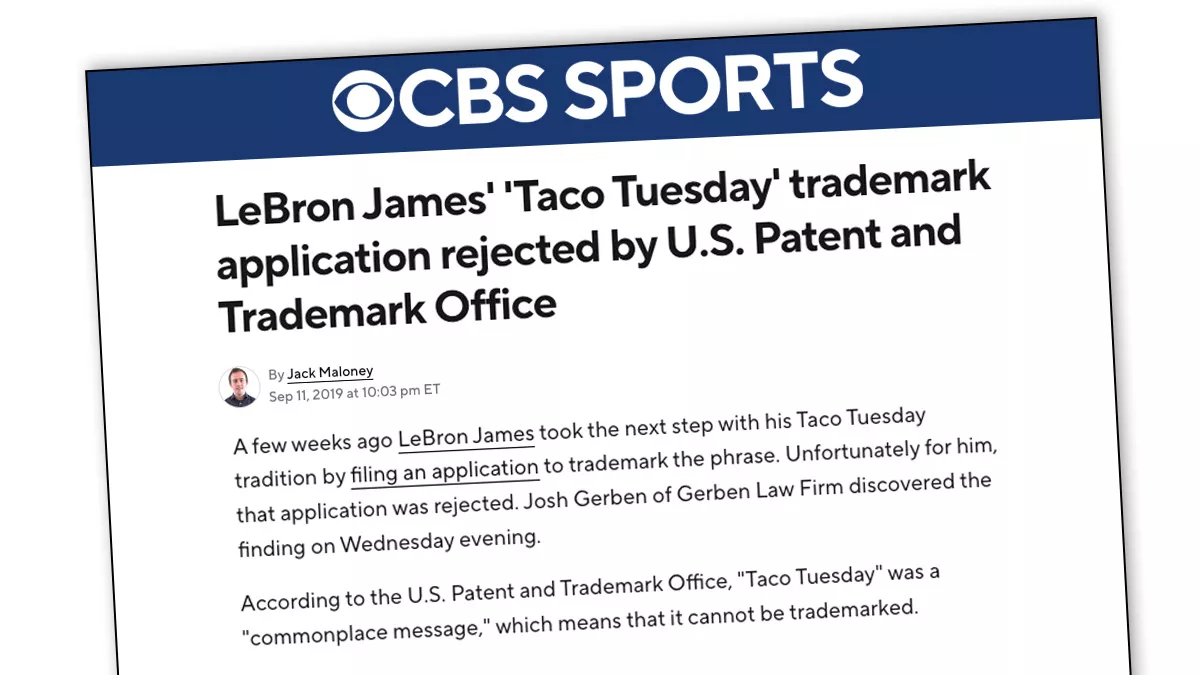
A useful comparison is LeBron James’ attempt to trademark ‘Taco Tuesday.’ That filing generated a similar public backlash and was ultimately refused by the USPTO. The underlying legal issue was the same.
When a phrase becomes ubiquitous in the marketplace, consumers no longer associate it with a single company or source. Instead, they view it as a common expression. Once that happens, legally speaking, the phrase ceases to function as a trademark.
The legal standard is straightforward. A trademark must serve as a source identifier.
If consumers encounter a phrase on a product, they should be able to recognize that the product comes from a specific company. With a phrase like ‘Hot Girls Read,’ that becomes difficult because the expression has been widely adopted by readers, creators, influencers, book clubs, and businesses across the internet.
In this case, if the owner of the ‘Hot Girls Read’ registration had attempted to aggressively enforce the mark, recipients of cease-and-desist letters would likely have had significant defenses. There would have been strong arguments that the registration should never have been granted in the first place and that it could be canceled.
That raises another question: Why did the USPTO grant the trademark registration?
Trademark examiners are trained to identify commonly used phrases and refuse applications for trademarks of this type of phrase.
While the USPTO generally does an excellent job, it is not perfect. Examination mistakes occur, and this appears to be one of those situations.
If the application had been refused during examination, as I believe it should have been, much of the controversy likely never would have occurred.
Ultimately, the correct outcome in this case is that no one owns ‘Hot Girls Read.’
Because the registration was abandoned, the phrase ‘Hot Girls Read’ can be used by anyone.
It is also very unlikely that the USPTO will make this mistake again if someone else tries to register the phrase.
The public controversy surrounding this dispute has generated a substantial record of evidence showing widespread use of the phrase, making it even more difficult for future trademark applicants to argue that the phrase identifies a single commercial source.
For now, the phrase returns to where many believe it has always belonged: the public domain of popular culture, rather than under the control of a single trademark owner.

Josh Gerben, Esq.
Josh Gerben, Esq. is a nationally recognized trademark attorney and the founder of Gerben IP. Since launching the firm in 2008, he has overseen the registration of over 10,000 trademarks and handled over 1,500 trademark disputes. Josh's practice focuses on building and defending global trademark portfolios for clients. These clients include entrepreneurs, private equity-backed businesses, athletes, celebrities, and public companies. Frequently quoted by major media outlets like CNBC, CNN, The New York Times, and The Wall Street Journal, Josh is widely regarded as a leading authority in trademark law.
Do you need assistance with a trademark matter?
Contact an Attorney Today