

Death Wish Coffee Sues Liquid Death in Battle Over ‘Death’ Branding
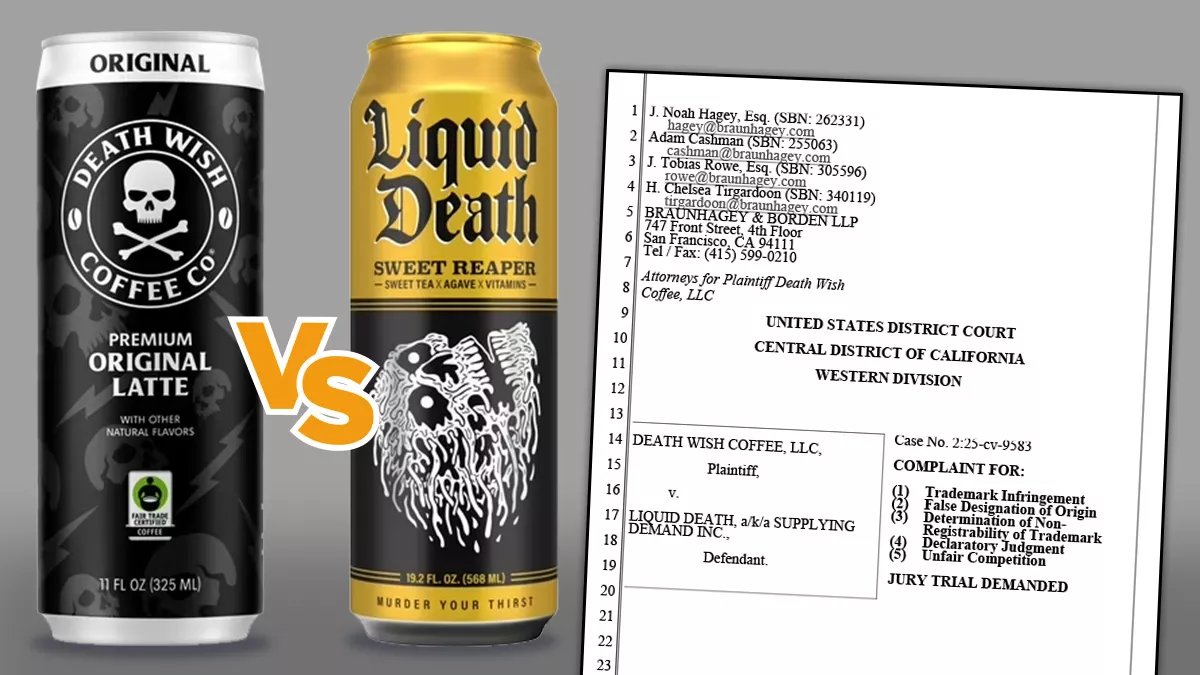
A trademark showdown is brewing between two beverage companies known for their bold branding. Death Wish Coffee has filed a federal lawsuit against Liquid Death, accusing the $1.4 billion-valued company of trademark infringement over plans to launch coffee and coffee-flavored beverages.
According to the complaint, filed on October 7, 2025, Death Wish claims that Liquid Death’s upcoming coffee line would “irreparably harm” the Death Wish brand and create widespread consumer confusion.
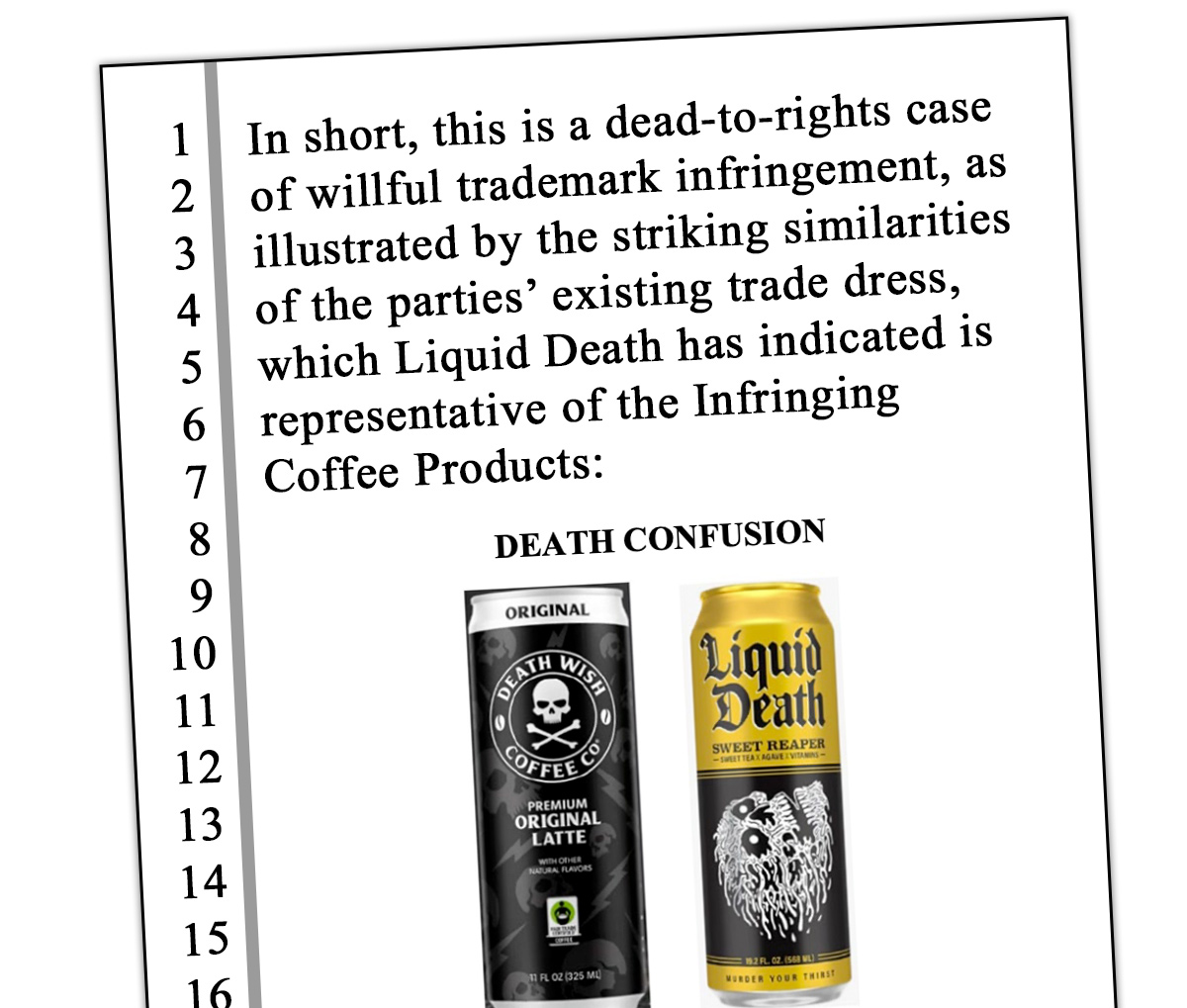
The lawsuit calls the case a “dead-to-rights” (pun intended) example of willful infringement. Death Wish alleges that the two companies’ coffee products could be sold side by side, targeting similar consumers and using overlapping marketing and retail channels.
Timeline of communication between the parties
Death Wish first learned of Liquid Death’s plan to sell coffee products due to new trademark filings made by Liquid Death in May 2025.
Then, on July 29, 2025, Death Wish’s counsel sent a detailed letter to Liquid Death’s legal team outlining Death Wish’s trademark rights and objecting to Liquid Death’s plans to enter the coffee market.
Liquid Death’s counsel replied on August 5, 2025, stating that the company would not provide a substantive response until September 5, but assured Death Wish that no coffee products would launch in the meantime.
When September 5 arrived, Liquid Death responded with a letter confirming its intent to move forward with the coffee launch. Death Wish says it sent multiple follow-up letters “imploring” Liquid Death to abandon what it called an “unlawful plan to infringe” on its marks, but received no commitment to change course.
Background on the brands
Death Wish, founded in 2012 in Saratoga Springs, New York, has grown into one of the nation’s top-selling premium coffee brands, sold in all 50 states and thousands of retailers. The company owns multiple federal trademark registrations, including ‘Death Wish,’ ‘Death Cups,’ ‘Gingerdead,’ and ‘Ginger Dead.’ It’s perhaps best known for being the smallest business ever to run a Super Bowl commercial.
Liquid Death, founded several years later in 2019, built its brand on canned mountain water and sparkling water with a punk-rock aesthetic and dark humor. While the companies previously coexisted in separate markets — coffee versus water — Death Wish now claims that boundary has vanished.
Example of Past Co-Existence from the Lawsuit

“Liquid Death is flush with investment and preparing to enter Death Wish’s market territory,” the lawsuit states, warning that coffee sales under the Liquid Death name would cause “monumental” confusion among consumers.
Death Wish is asking the court to issue both preliminary and permanent injunctions blocking the launch of Liquid Death’s coffee products. It’s also seeking punitive damages and attorneys’ fees.
Who will win the case?
So, does Death Wish Coffee have a legitimate claim?
Absolutely.
The test for trademark infringement is straightforward:
Would the average consumer believe Liquid Death Coffee and Death Wish Coffee come from the same manufacturer?
If these two products appeared side by side on a grocery store shelf, both in tall cans, both with dark, edgy branding, it’s not hard to imagine at least some consumers assuming they were made by the same company. That’s what is called a “likelihood of consumer confusion.” And if a judge or jury finds that consumer confusion is likely, Death Wish Coffee would win the case.
Would consumers think these products came from the same company?


Moreover, a review of the U.S. trademark register shows that very few companies have used the word ‘DEATH’ in connection with coffee products. Death Wish has essentially owned the ‘death space’ in coffee since launching in 2012. That long-standing use gives them a strong argument that Liquid Death’s entry into coffee could infringe on their rights.
Liquid Death, however, does have potential defenses. The company might argue that its brand has become so widely recognized that consumers would immediately associate any Liquid Death Coffee product with Liquid Death Water, not Death Wish Coffee. It will also likely argue that the trademarks are fundamentally different and consumers would be unlikely to confuse the two brands.
As is common in these types of disputes, it’s also possible that the case doesn’t go the full distance in court. The parties could reach a settlement. Possible resolutions could involve a coexistence agreement that limits where and how each company sells coffee, or even a buyout of Death Wish’s rights.
That said, Death Wish’s claim is far from trivial. It’s a small but established player defending a brand it has built over more than a decade.

Josh Gerben, Esq.
Josh Gerben, Esq. is a nationally recognized trademark attorney and the founder of Gerben IP. Since launching the firm in 2008, he has overseen the registration of over 10,000 trademarks and handled over 1,500 trademark disputes. Josh's practice focuses on building and defending global trademark portfolios for clients. These clients include entrepreneurs, private equity-backed businesses, athletes, celebrities, and public companies. Frequently quoted by major media outlets like CNBC, CNN, The New York Times, and The Wall Street Journal, Josh is widely regarded as a leading authority in trademark law.
Do you need assistance with a trademark matter?
Contact an Attorney Today