

Aretha Franklin’s Estate Targets ‘Aretha Frankensteins’ Trademark Ahead of Halloween
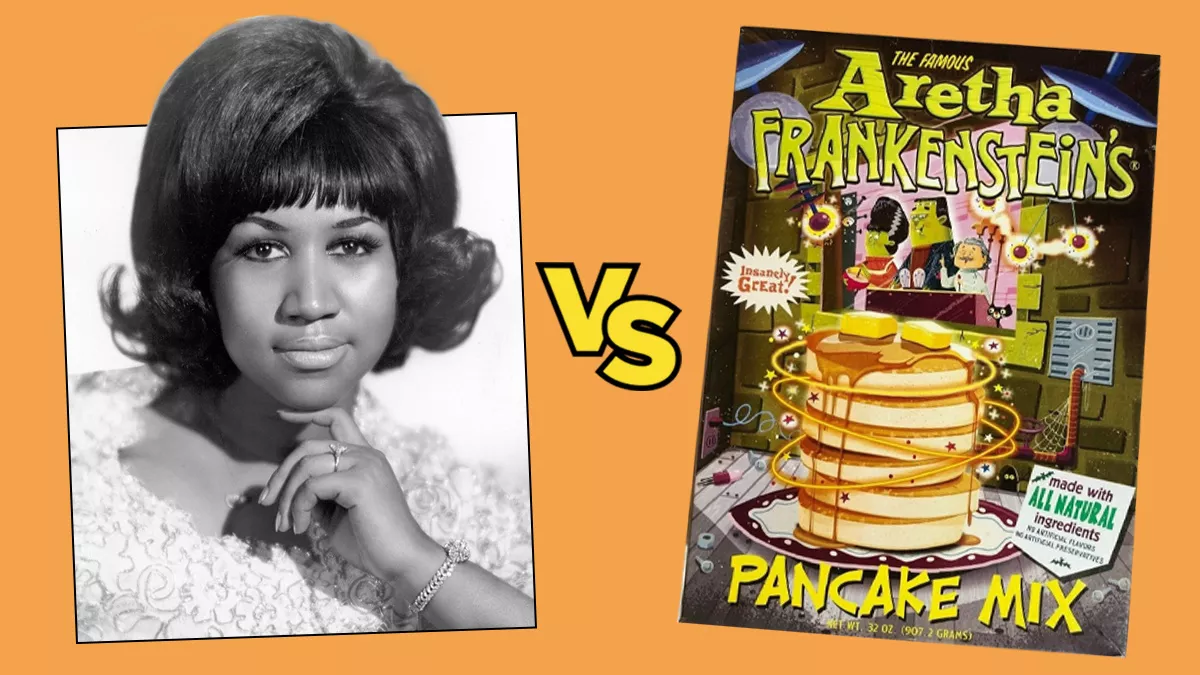
The Queen of Soul’s Estate has taken legal action to cancel a trademark registration for ‘Aretha Frankensteins.’
(And the timing could not be spookier.)
Aretha’s Estate filed the formal ‘Petition to Cancel‘ against the ‘Aretha Frankensteins’ registration last week, claiming that the registration (owned by Frankenstein Mills, Inc.) inappropriately turns her name into a commercial pun.
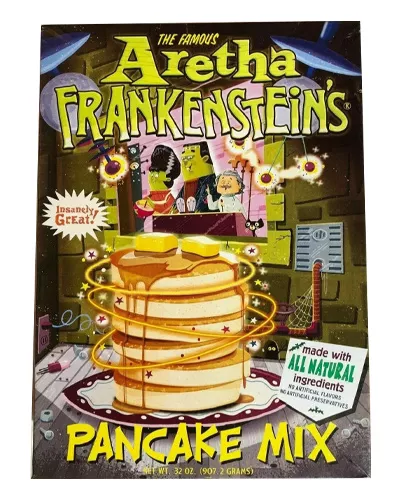
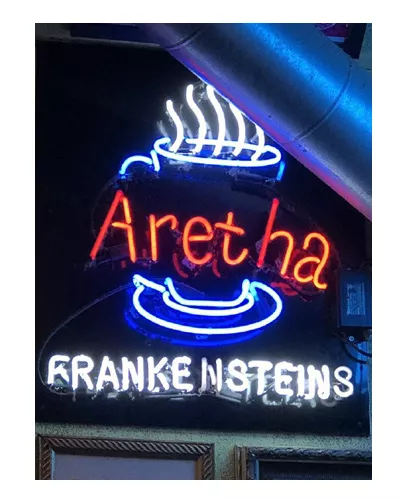
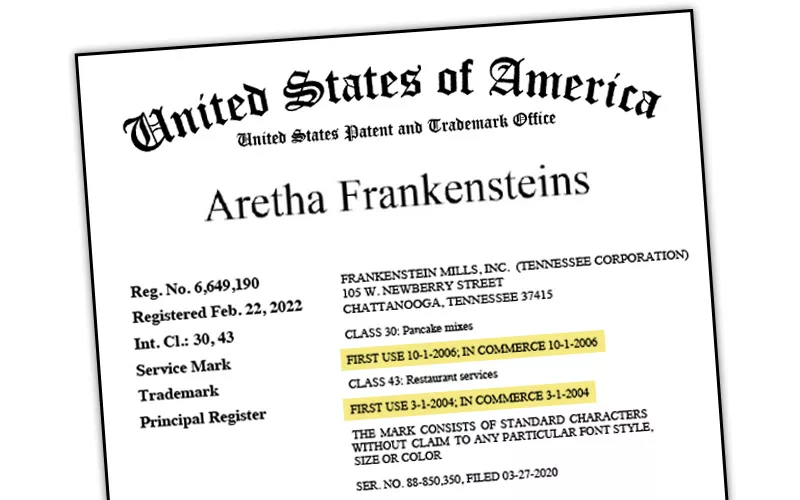
The registration for ‘Aretha Frankensteins’, obtained in 2022, protects the name as a brand of pancake mix and restaurants. The company behind it claims that it has been selling the pancake mix since 2006. It also appears they recently expanded into offering beer and clothing.
Examples of the ‘Aretha Frankensteins’ Beer and Clothing
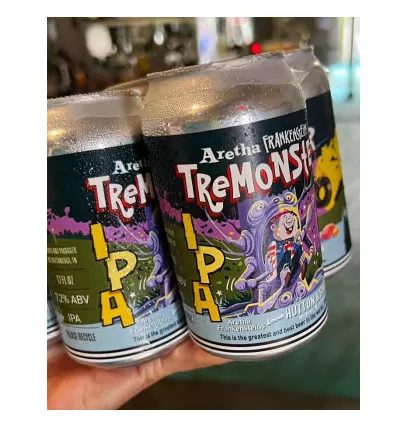
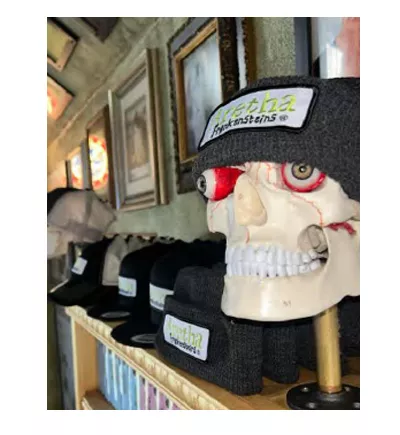
Aretha’s Estate calls the mark “distasteful” and argues that the company’s “intentional co-opting” of Aretha’s name eviscerates any defenses that might be available.
For its part, the Estate owns 18 trademarks, including multiple federal trademark registrations for ‘Aretha’ and ‘Aretha Franklin’ covering musical recordings and live performances, among other goods and services.
Trademarks Owned by the Estate of Aretha Franklin
| wdt_ID | wdt_created_by | wdt_created_at | wdt_last_edited_by | wdt_last_edited_at | Trademark | Serial # |
|---|---|---|---|---|---|---|
| 1 |  |
99273735 | ||||
| 2 | 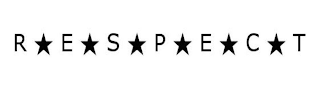 |
97630523 | ||||
| 3 | QUEEN OF SOUL | 97613177 | ||||
| 4 | ARETHA | 97614633 | ||||
| 5 | THINK | 97614568 | ||||
| 6 | 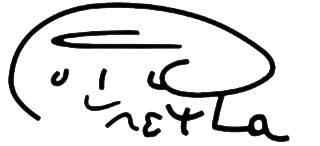 |
99273765 | ||||
| 7 | FREEDOM | 98404268 | ||||
| 8 | QUEEN OF SOUL | 98384722 | ||||
| 9 | THE ARETHA | 97612531 | ||||
| 10 |  |
97630566 | ||||
| 11 | 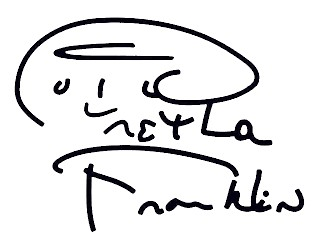 |
99273751 | ||||
| 12 | RESPECT | 98384656 | ||||
| 13 | ARETHA FRANKLIN | 88458925 | ||||
| 14 | ARETHA FRANKLIN AMPHITHEATRE | 97612518 | ||||
| 15 |  |
99273727 | ||||
| 16 | R.E.S.P.E.C.T. | 98384739 | ||||
| 17 | ARETHA FRANKLIN | 98384675 | ||||
| 18 | ARETHA | 97980379 | ||||
| 19 | ARETHA ARETHA | 88235337 |
This information was last updated on October 30, 2025.
Does Aretha’s Estate have a strong case?
In this case, I would expect Aretha’s Estate to prevail and the registration for ‘Aretha Frankenstein’s’ to be canceled by the USPTO.
‘Aretha Franklin’ is one of those names instantly recognized by the public.
By using a name that clearly invokes her in the minds of consumers as the brand of a pancake mix (and beer), there is a significant likelihood that consumers believe there’s some endorsement or licensing relationship with her Estate.
Still, there are defenses available to Frankenstein Mills, Inc. The company began using the ‘Aretha Frankensteins’ mark in 2004. Because the brand had operated for years without objection, Frankenstein Mills Inc. could raise defenses such as laches (a delay in enforcement) or failure to police. Those defenses can complicate any effort by the Estate to stop ongoing use, even if the registration itself is ultimately canceled.
Examples of How the ‘Aretha Frankensteins’ Trademark Has Been Used
This case also highlights the importance of monitoring trademark filings. If Aretha’s representatives had been watching the USPTO’s database (or conducting marketplace monitoring), they likely would have spotted ‘Aretha Frankensteins’ in time to oppose it before registration. Waiting several years not only emboldens the registrant but also weakens the Estate’s claim that consumers are confused.
The owner of the ‘Aretha Frankensteins’ trademark might also claim that the mark is just a parody, and consumers are not likely to be confused into thinking these products are connected with the Estate.
This argument is not likely to succeed thanks to a recent Supreme Court decision that found if you’re using a pun as a real product name (rather than just a joke on a T-shirt), you’re playing in trademark infringement territory, not the free-speech space.
In my view, the Estate has a solid chance of getting the registration canceled, particularly under the Supreme Court’s recent precedent. But cancellation alone doesn’t bar use. It just removes federal protection. To actually stop the brand, the Estate would need to file a lawsuit in federal court and prove either infringement or dilution, an uphill battle given the brand’s longstanding use since about 2004.
What lessons can brand owners take from this case?
From where I sit, there are several key takeaways:
1. Famous names and brands demand vigilance.
When you represent a legacy such as Aretha Franklin’s, the risk of third-party registrations exploiting that fame (especially outside the core business) is real.
You must actively monitor the marketplace and trademark filings. The fact that this name has been on the market since 2004 and that a trademark application was filed in 2019, but never challenged, is a sign that Aretha did not have a good brand protection program set up.
2. Timing matters.
The longer you wait to act, the more exposure you have to defenses like laches, acquiescence, or market‐establishment of the mark. Even if you win the cancellation proceeding, you may not be able to stop use if the mark is entrenched.
Final thoughts
In many ways, this is a trademark story with a perfect seasonal twist: on the eve of Halloween, we have the Estate of Aretha Franklin confronting an ‘Aretha Frankesteins’ brand.
But beyond the Halloween theatrics, the underlying narrative is serious. If you don’t take steps to actively protect your brand, someone else might take it to the Monster Mash.

Josh Gerben, Esq.
Josh Gerben, Esq. is a nationally recognized trademark attorney and the founder of Gerben IP. Since launching the firm in 2008, he has overseen the registration of over 10,000 trademarks and handled over 1,500 trademark disputes. Josh's practice focuses on building and defending global trademark portfolios for clients. These clients include entrepreneurs, private equity-backed businesses, athletes, celebrities, and public companies. Frequently quoted by major media outlets like CNBC, CNN, The New York Times, and The Wall Street Journal, Josh is widely regarded as a leading authority in trademark law.
Do you need assistance with a trademark matter?
Contact an Attorney Today