

A Look at Buc-ee’s Trademark Enforcement Strategy
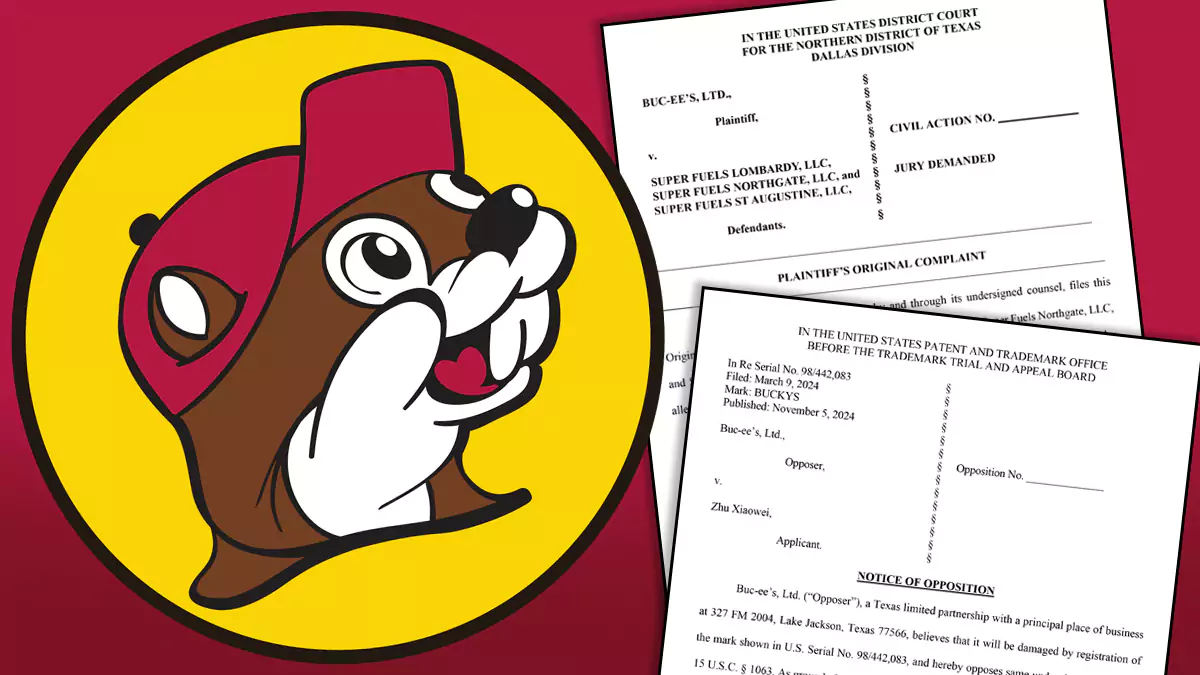
Buc-ee’s has cultivated an iconic brand, with its beaver mascot serving as a key symbol of its identity.
Over the past few years, the company has aggressively pursued trademark infringement cases.
Most recently, in January 2025, the Texas-based convenience store chain filed a trademark infringement lawsuit against Super Fuels, a North Texas gas station brand. Buc-ee’s claims that Super Fuels’ logo, which consists of a smiling cartoon dog in a red cape, looks too much like its own famous beaver mascot.

The lawsuit, filed in federal court, argues that the similarities could confuse customers. Buc-ee’s wants the court to force Super Fuels to stop using the logo. It is also seeking damages, legal fees, and any profits the smaller chain may have made from the alleged infringement.
For Buc-ee’s, protecting its brand is serious business. As of February 2025, Buc-ee’s is actively pursuing two oppositions before the Trademark Trial and Appeal Board (TTAB) and two federal trademark lawsuits, including its case against Super Fuels.
About Buc-ee’s trademarks
Buc-ee’s has built a cult-like following with its spotless restrooms, oversized convenience stores, and wide-ranging merchandise. It boasts a large trademark portfolio, with 62 U.S. registrations since 2007.
With 12 trademark registrations protecting its beaver logo alone, Buc-ee’s considers this symbol central to its brand. The company takes a strong stance in defending its trademarks against businesses it believes are infringing on its distinctive look.
Since registering its first mark in 2007, Buc-ee’s has filed 15 oppositions with the Trademark Trial and Appeal Board and 11 lawsuits for trademark infringement. Most of these disputes have ended in settlements, with defendants agreeing to modify or remove their logos.
In late 2024, Buc-ee’s sued Duckees, a Missouri-based liquor store, over its logo, which featured a cartoon duck inside a yellow circle. Buc-ee’s claimed Duckees was trying to profit from its brand recognition.

Buc-ee’s has also enforced its trademarks against other businesses with names like “Bukys” and “Bucky’s,” arguing that the other brands could cause consumer confusion.
In 2018, Buc-ee’s sued Texas-based Choke Canyon, arguing that its logo, featuring a smiling alligator inside a yellow circle, was confusingly similar to Buc-ee’s branding. The court ruled in Buc-ee’s favor, noting similarities not just in the logo but also in the overall store design.

As I told The Texas Lawbook, trademark infringement cases often settle before trial because litigation comes with a high financial burden. Such a lawsuit, like the one Buc-ee’s won, can cost a defendant upwards of $1 million in legal fees. Because most small or medium-sized businesses are not able to afford this type of legal budget, many of them will fold to demands made by a larger company such as Buc-ee’s.
Why Buc-ee’s focuses on trademark enforcement
So why does Buc-ee’s enforce its trademarks?
Under federal law, trademark owners have a duty to police the marketplace and prevent infringement and dilution of their brand. As demonstrated by the Buc-ee’s cases, trademarks do not need to be identical to be considered infringing. Even similar marks can weaken a brand’s distinctiveness and dilute the value of its trademark registration.
Trademark registrations create a zone of protection for a brand. When a brand owner enforces their rights, they maintain or even increase this zone of protection. However, if the trademark owner allows similar trademarks to exist, it could weaken the distinctiveness of the brand’s identity.
By actively enforcing its rights, Buc-ee’s is ensuring that potential infringers do not gain ground and cause consumer confusion in the marketplace.
Final thoughts
Buc-ee’s trademark enforcement strategy highlights the importance of vigilance in protecting brand identity. Businesses that do not actively police their trademarks risk dilution, consumer confusion, and loss of exclusivity, making proactive enforcement essential to maintaining long-term brand strength.
On the flip side, this case also is a warning sign for companies that are adopting new names and logos. Ensuring that you complete a thorough trademark clearance search is an important step to avoid being on the wrong end of a trademark infringement lawsuit.

Josh Gerben, Esq.
Josh Gerben, Esq. is a nationally recognized trademark attorney and the founder of Gerben IP. Since launching the firm in 2008, he has overseen the registration of over 10,000 trademarks and handled over 1,500 trademark disputes. Josh's practice focuses on building and defending global trademark portfolios for clients. These clients include entrepreneurs, private equity-backed businesses, athletes, celebrities, and public companies. Frequently quoted by major media outlets like CNBC, CNN, The New York Times, and The Wall Street Journal, Josh is widely regarded as a leading authority in trademark law.
Do you need assistance with a trademark matter?
Contact an Attorney Today