

Anthropic’s ‘CLAUDE MYTHOS’ Trademark Application Denied by USPTO
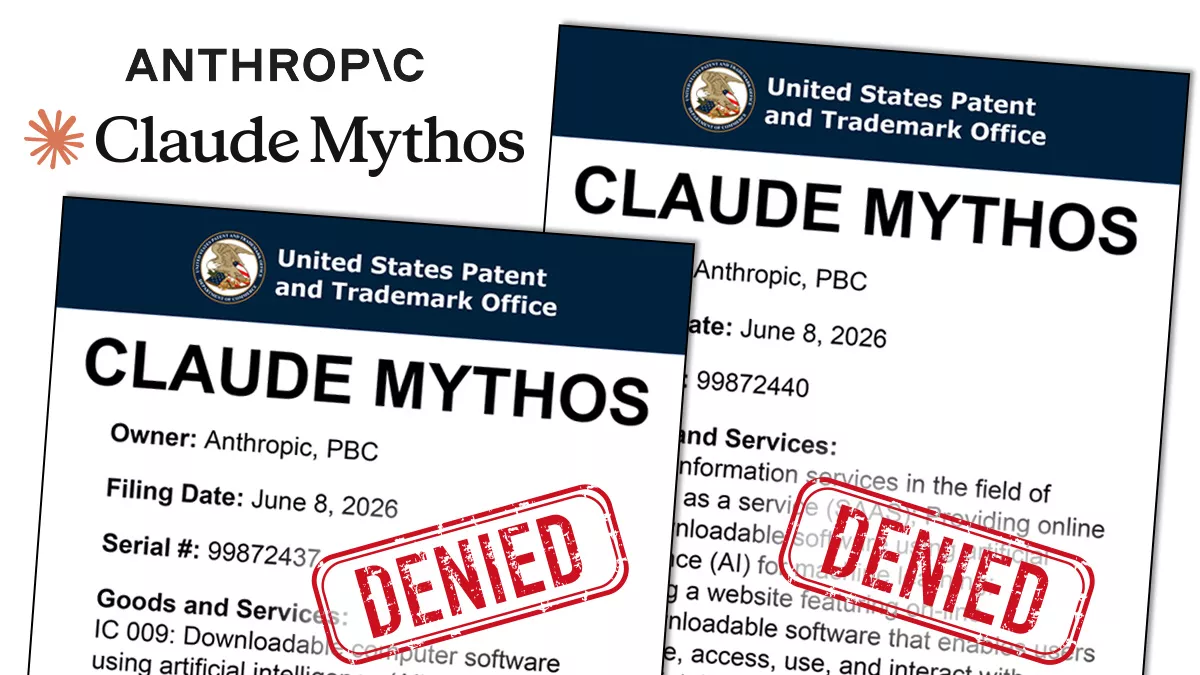
The USPTO issued initial refusals of two applications that Anthropic filed for ‘CLAUDE MYTHOS.’
In refusing the trademark filings, the USPTO found three previously filed trademarks that it determined were too close to ‘CLAUDE MYTHOS.’ and could create a likelihood of consumer confusion.
The USPTO’s examiner wrote the following in denying Anthropic’s applications:
“Because the marks are similar and the goods and services are related, there is a likelihood of confusion as to the source of [Anthropic’s] goods and services, and registration is refused pursuant to Section 2(d) of the Trademark Act.”
The trademarks cited by the USPTO are as follows:
- ‘MYTHOS’
Software for managing University endowment processes and donors. - ‘MYTHOS’
Software for organizing, managing, and sharing documents and content. - ‘MYTHOS’
AI software for storing, managing, and searching user-generated content.
None of the three businesses appear to be a direct competitor to Anthropic.
That said, under U.S. trademark law, the fact that these companies are not direct commercial competitors does not heavily factor into the USPTO’s analysis.
The USPTO examines new trademark applications against previously filed and registered marks based solely on the language in the filings.
And while the companies behind the existing ‘MYTHOS’ trademarks may not be developing AI models, their software offerings potentially overlap with functions that Anthropic’s technology can perform.
That overlap was enough for the USPTO to issue refusals of both applications.
It is important to note that the refusals are not final.
Anthropic has an opportunity to respond, challenge the USPTO’s conclusions, and potentially negotiate with the companies whose trademarks were cited.
Can Anthropic Overcome the Trademark Refusals?
This type of initial refusal by the USPTO is not uncommon. But it stops Anthropic’s trademark applications in their tracks.
In this case, the companies whose trademarks were cited against Anthropic’s applications by the USPTO have descriptions of goods and services that are broad enough to potentially overlap with Anthropic’s AI technology.
Even though these companies are not necessarily in the same business as Anthropic, their software can perform functions that an AI model could arguably perform as well.
And that’s where trademark law gets complicated.
The USPTO doesn’t look at what two companies actually do in the marketplace. It only looks at how their goods and services are described in their trademark applications and registrations.
When those descriptions overlap, even two businesses that seem very different can run into trademark conflicts.
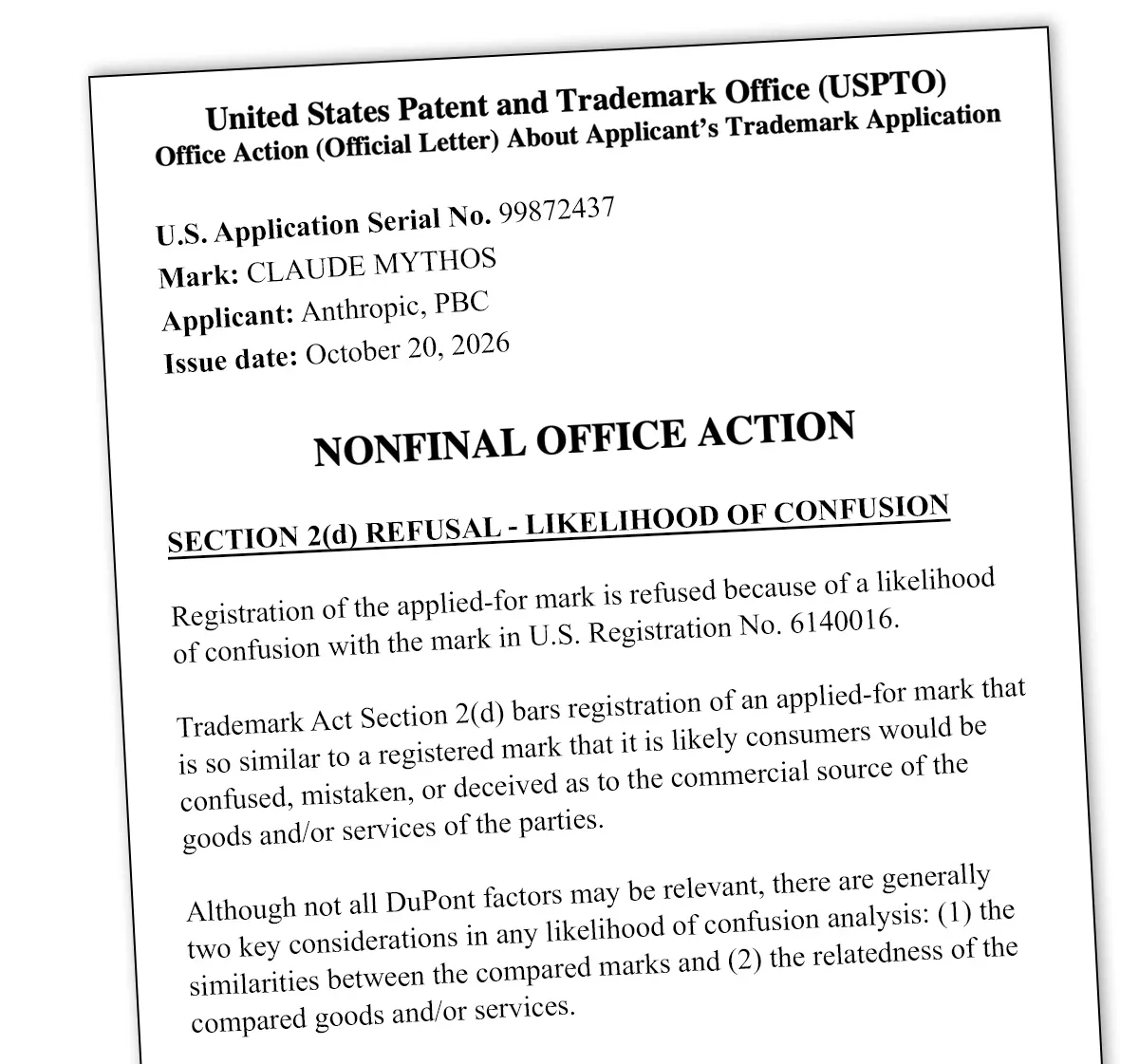
In this case, Anthropic may be able to amend the descriptions in its applications to distinguish its technology from the products and services covered by the earlier trademarks.
It can also submit legal arguments explaining why consumers would not be confused by the coexistence of the marks.
But based on the breadth of the earlier trademark filings, I believe Anthropic could face a significant challenge in overcoming these refusals through legal arguments alone.
Another option would be for Anthropic to contact the owners of the earlier ‘MYTHOS’ trademarks and seek their consent to register ‘CLAUDE MYTHOS.’
Obtaining these types of “consent agreements” is a common tool in trademark practice. If two companies agree (in writing) that their trademarks can coexist, the USPTO may accept that agreement and withdraw its refusal.
That said, obtaining consent from all the relevant companies would likely be difficult in this situation.
Anthropic is already a major player in artificial intelligence, and its products have the potential to dominate search results and online discussions involving the ‘MYTHOS’ name.
For smaller companies that have spent years building businesses around their own ‘MYTHOS’ trademarks, that could create a serious concern.
Even if consumers aren’t confused about the source of the products, a dominant AI product using the same name could make it more difficult for customers to find the smaller companies online.
And because those companies filed their trademark applications before Anthropic, they potentially have valuable legal leverage.
Anthropic could also consider offering financial compensation in exchange for consent or to acquire certain trademark rights outright.
Whether the companies would be willing to entertain such a proposal would be an open question.
A Growing Problem for Companies Seeking New Trademarks
This case also illustrates a much broader problem facing companies trying to protect new product names.
The U.S. trademark register has become increasingly crowded.
With more than 500,000 new trademark applications filed annually, companies face an expanding universe of existing marks that could potentially stand in the way of registration.
It is becoming harder and harder to find names that do not have some technical overlap with prior-filed applications… especially in the software industry.
For now, Anthropic has been told that it cannot register ‘CLAUDE MYTHOS’ without overcoming the USPTO’s objections.
And that leaves one final question.
Will Anthropic use AI to draft an appeal?

Josh Gerben, Esq.
Josh Gerben, Esq. is a nationally recognized trademark attorney and the founder of Gerben IP. Since launching the firm in 2008, he has overseen the registration of over 10,000 trademarks and handled over 1,500 trademark disputes. Josh's practice focuses on building and defending global trademark portfolios for clients. These clients include entrepreneurs, private equity-backed businesses, athletes, celebrities, and public companies. Frequently quoted by major media outlets like CNBC, CNN, The New York Times, and The Wall Street Journal, Josh is widely regarded as a leading authority in trademark law.
Do you need assistance with a trademark matter?
Contact an Attorney Today