

Caleb Williams’ ‘Iceman’ Trademark Application Refused by USPTO
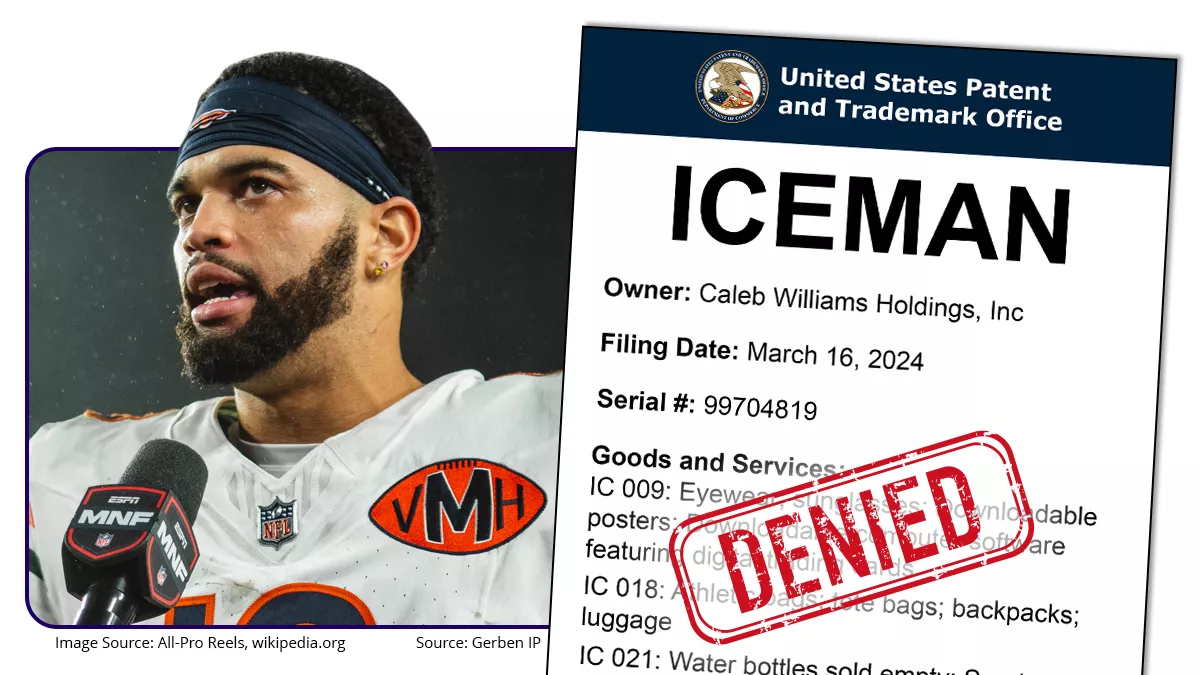
Chicago Bears quarterback Caleb Williams has hit a legal hurdle in his effort to trademark the nickname ‘Iceman.’
The U.S. Patent and Trademark Office has issued an initial refusal of Williams’ trademark application, concluding that the proposed mark is too similar to an existing trademark owned by LaCrosse for its ‘Iceman’ line of insulated boots.
The refusal, issued June 24, found that because the marks are identical and at least some of the products listed in Williams’ application could be considered related to Lacrosse’s boots, consumers could mistakenly believe they come from the same source.
The decision does not end Williams’ trademark pursuit.
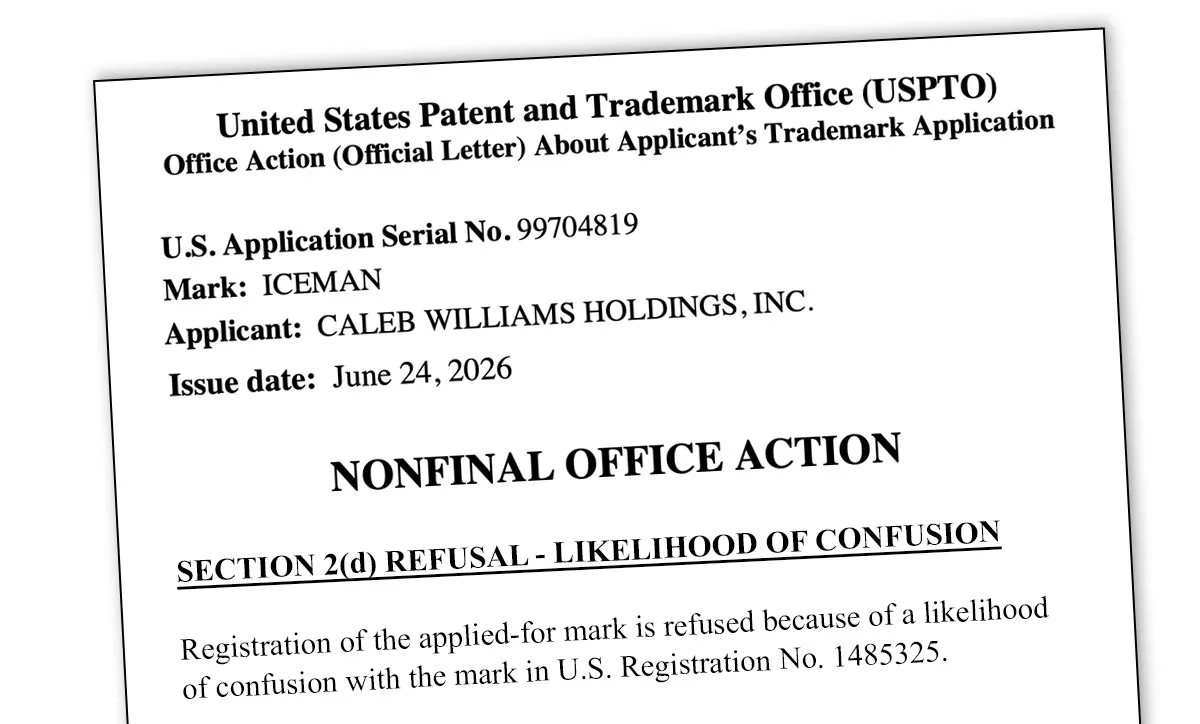
Initial refusals from the USPTO are common and can be challenged through legal arguments or appeals. In fact, roughly 65% of new trademark applications reviewed by the USPTO have been refused so far in 2026.
Williams’ application seeks protection for the ‘Iceman’ name across a wide range of products and services, including clothing, sunglasses, digital trading cards, athletic bags, footballs, and football-related entertainment and informational services.
How Williams should respond to the refusal
There are several ways Williams can respond to his refusal.
First, the refusal does not appear to be the strongest work by the USPTO.
The examining attorney treated Williams’ application as an all-or-nothing proposition, refusing every product and service he applied for because of LaCrosse’s registration for insulated boots.
But trademark law doesn’t always require that result.
While I can understand refusing Williams’ application for clothing items (since footwear and apparel are often viewed as related products), there are a variety of goods and services outside clothing that could still serve as a basis for registration.
For example, Williams applied for goods such as sunglasses, footballs, athletic bags, and digital trading cards, as well as services such as organizing social sporting events and providing football information online. Those products and services are, in my view, far enough removed from insulated hunting boots.
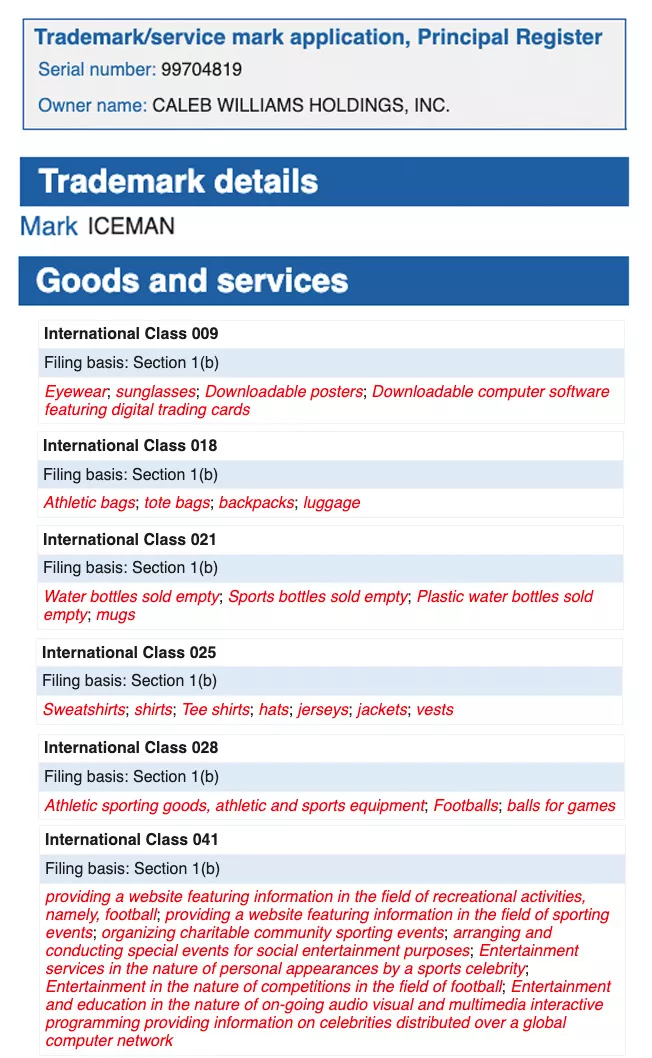
The USPTO examiners have the discretion to issue only a partial refusal. In this case, the USPTO could have denied the application for the clothing items while allowing many of the unrelated goods and services to proceed toward registration. Instead, the entire application was refused.
This provides Williams with a strong argument on appeal that at least some of those goods and services should be allowed to register despite the existing boot trademark.
There may also be a second path forward.
It appears that LaCrosse may no longer be selling ‘Iceman’ boots. Instead, it now appears to market a product called ‘Ice King.’
If LaCrosse has permanently stopped using the ‘Iceman’ trademark to make and sell boots, its registration would be vulnerable to cancellation.
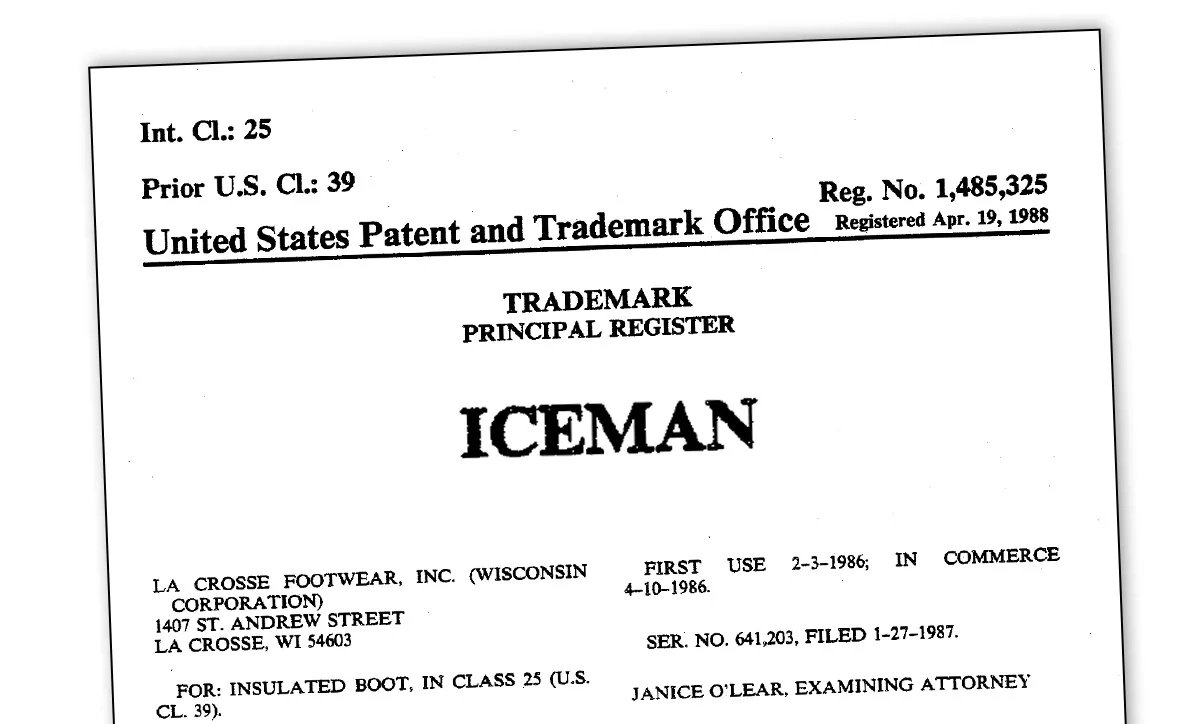
Trademark rights in the United States require a company to continue to use a trademark to sell the goods listed in a registration. If a company abandons a trademark by no longer selling products under the trademark, another party can ask the USPTO to cancel the registration.
In this case, if Williams were successful in cancelling LaCrosse’s registration, his entire application could then proceed to registration.
That said, if Williams overcomes the USPTO’s refusal, another challenge is already waiting in the wings…
NBA Hall of Famer George Gervin, whose legendary nickname is “The Iceman,” has previously indicated that he intends to oppose Williams’ trademark applications if they are approved by the USPTO.

Josh Gerben, Esq.
Josh Gerben, Esq. is a nationally recognized trademark attorney and the founder of Gerben IP. Since launching the firm in 2008, he has overseen the registration of over 10,000 trademarks and handled over 1,500 trademark disputes. Josh's practice focuses on building and defending global trademark portfolios for clients. These clients include entrepreneurs, private equity-backed businesses, athletes, celebrities, and public companies. Frequently quoted by major media outlets like CNBC, CNN, The New York Times, and The Wall Street Journal, Josh is widely regarded as a leading authority in trademark law.
Do you need assistance with a trademark matter?
Contact an Attorney Today