

USPTO Rejects Snoop Dogg’s Bid to Trademark ‘Smoke Weed Everyday’
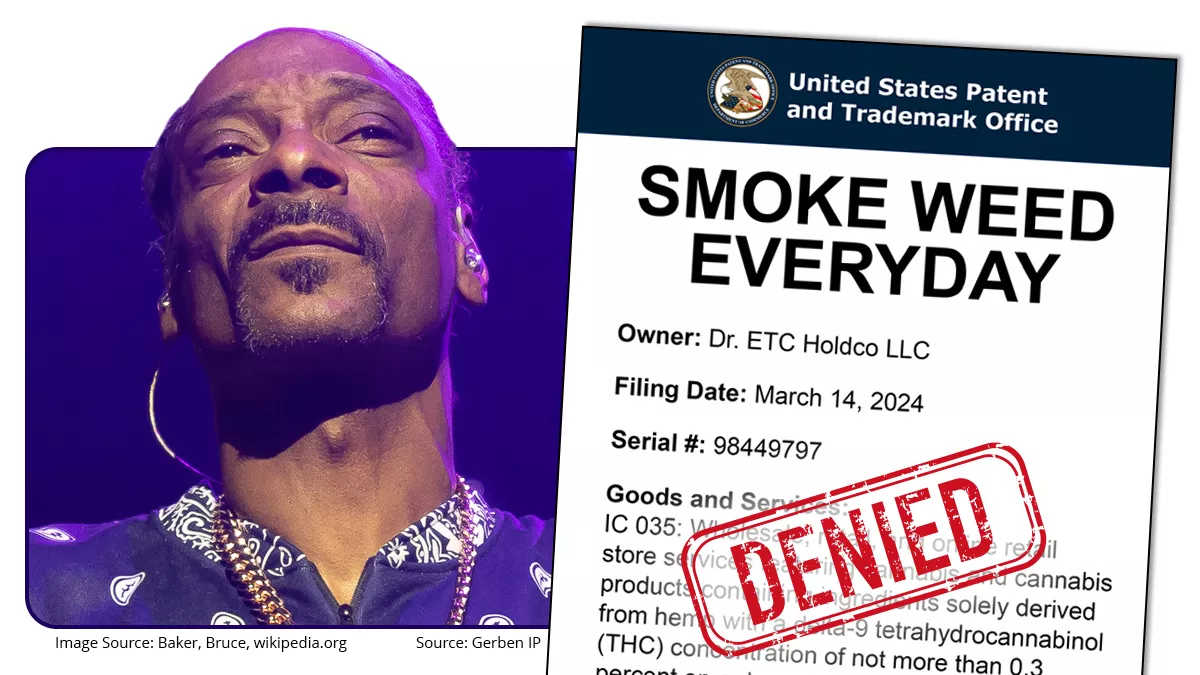
Snoop Dogg’s trademark application for ‘Smoke Weed Everyday’ has been denied by the USPTO.
The application was made by Dr. ETC Holdco, LLC, which is the entity that owns Snoop Dogg’s intellectual property portfolio.
Snoop indicated in the application that he planned on opening a retail store called ‘Smoke Weed Everyday’, which would sell cannabis products and related paraphernalia.
The USPTO ultimately refused the application on two separate grounds.
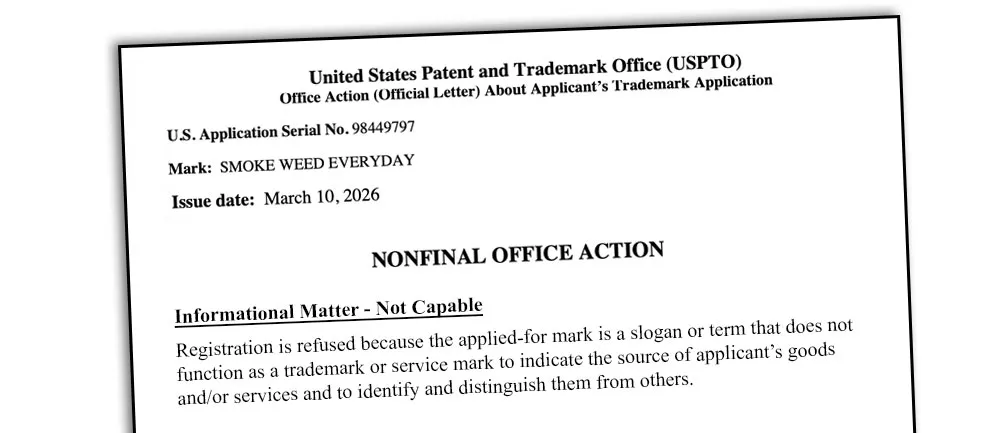
First, the agency concluded that the phrase ‘Smoke Weed Everyday’ fails to function as a trademark because it has become so popular. According to the USPTO’s examining attorney, the phrase is “widely used” by others as a general expression associated with cannabis culture.
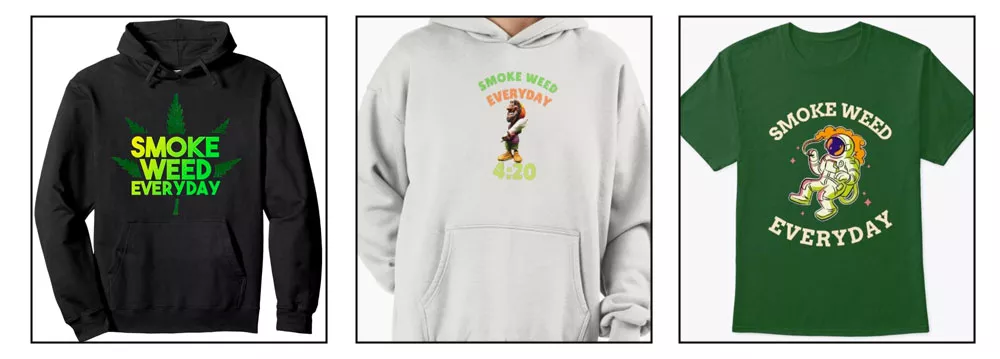
To support that position, the USPTO cited examples of the phrase appearing on merchandise offered through online marketplaces such as Amazon, WeDreams, and Redbubble, where it is commonly printed on clothing, accessories, and novelty items.
Examples of Third-Party Use Cited by the USPTO
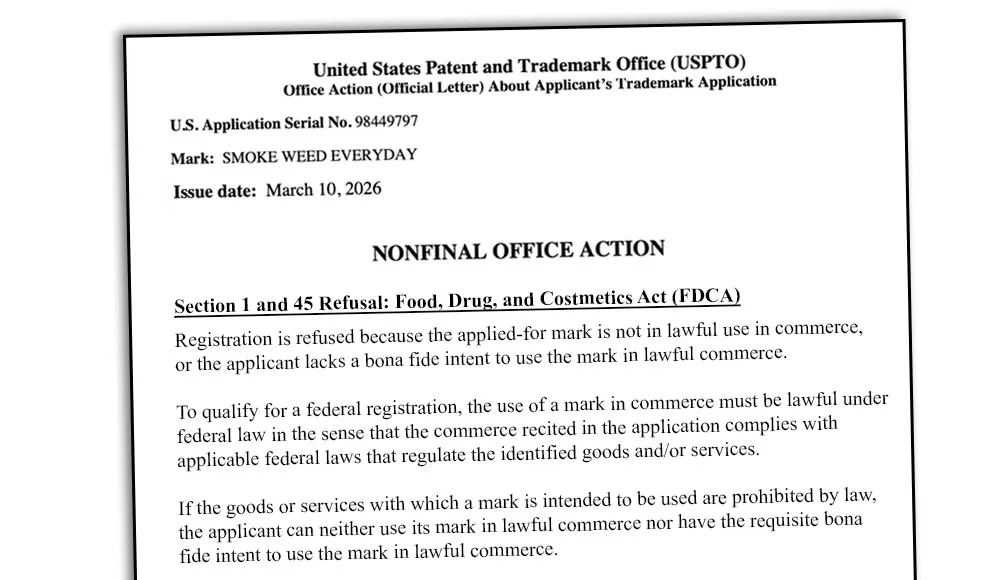
The second refusal is tied to the claim that Snoop planned to sell cannabis. The USPTO said that sales of such products would violate the Federal Food, Drug, and Cosmetic Act, which prohibits the introduction of foods containing unsafe additives into interstate commerce. Per Federal Law, cannabis is still considered an unsafe food.
Therefore, as trademark registrations cannot be issued for goods or services that are unlawful under federal law, the agency concluded the trademark could not proceed as filed.
It is worth noting that his refusal does not prevent Snoop from using the phrase as the name of a store, but it blocks the federal registration that would provide nationwide enforcement rights.
Can Snoop successfully appeal the refusal?
From a trademark perspective, this case presents two significant hurdles.
The first, and likely the most difficult, is the federal legality issue tied to cannabis sales. The application identifies retail services involving cannabis products. Under current Federal Law, marijuana remains illegal, and the USPTO routinely refuses applications tied to federally unlawful goods or services.
One way Snoop Dogg’s legal team could respond is by amending the application to limit the goods or services to products that are lawful under federal law, such as certain hemp-derived CBD products that comply with the 2018 Farm Bill. Without narrowing the scope of the application, the USPTO simply cannot issue the registration until Federal Law changes.
As far as the claim that ‘Smoke Weed Everyday’ fails to function as a trademark and is “merely informational,” Snoop has some options.
The phrase famously appears in the 1999 song “The Next Episode” by Dr. Dre, featuring Snoop Dogg.
For many fans who grew up in the late 1990s and early 2000s, hearing ‘Smoke Weed Everyday’ immediately calls to mind that song and Snoop’s broader brand.
That history could allow Snoop’s lawyers to argue that the phrase has acquired distinctiveness, meaning consumers associate the wording with him specifically.
If the USPTO agreed with that argument, it would withdraw the refusal on this point.
But there’s a counterargument.
Over the past two decades, the phrase has become ubiquitous in cannabis culture, appearing on everything from T-shirts to memes. When a phrase becomes widely used by the public, the USPTO may determine that consumers see it as a general slogan rather than a brand.
In other words, the very popularity that made the ‘Smoke Weed Everyday’ phrase famous may also make it harder to protect as a trademark today.
One of the most recent cases of this revolved around the ‘Taco Tuesday’ trademark. In 2023, Taco Bell was able to successfully cancel existing trademark registrations for ‘Taco Tuesday,’ effectively freeing the phrase for public use.
Why did it take the USPTO nearly 2 years to review Snoop’s application?
Another interesting aspect of this case is how long it took the USPTO to review the application.
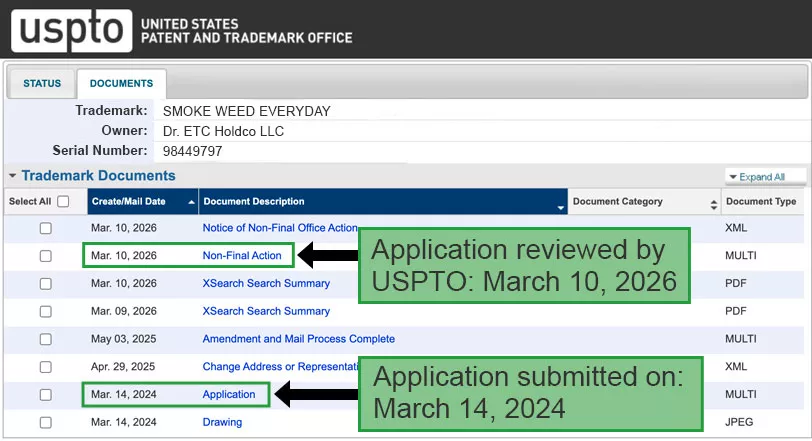
Although most trademark applications are examined within roughly six months, this one sat for nearly two years before receiving its review. That delay reflects the USPTO’s practice of routing cannabis-related applications to specialized examiners because the legal landscape around THC, CBD, and federal regulation continues to evolve.
How does this case turn out?
Taken together, the refusals create a steep uphill battle.
Fortunately for Snoop Dogg, this refusal affects only the trademark registration… not the activity the phrase famously celebrates.
Fo’ Shizzle.

Josh Gerben, Esq.
Josh Gerben, Esq. is a nationally recognized trademark attorney and the founder of Gerben IP. Since launching the firm in 2008, he has overseen the registration of over 10,000 trademarks and handled over 1,500 trademark disputes. Josh's practice focuses on building and defending global trademark portfolios for clients. These clients include entrepreneurs, private equity-backed businesses, athletes, celebrities, and public companies. Frequently quoted by major media outlets like CNBC, CNN, The New York Times, and The Wall Street Journal, Josh is widely regarded as a leading authority in trademark law.
Do you need assistance with a trademark matter?
Contact an Attorney Today