

6 Essential U.S. Trademark Filing Tips for Foreign Attorneys
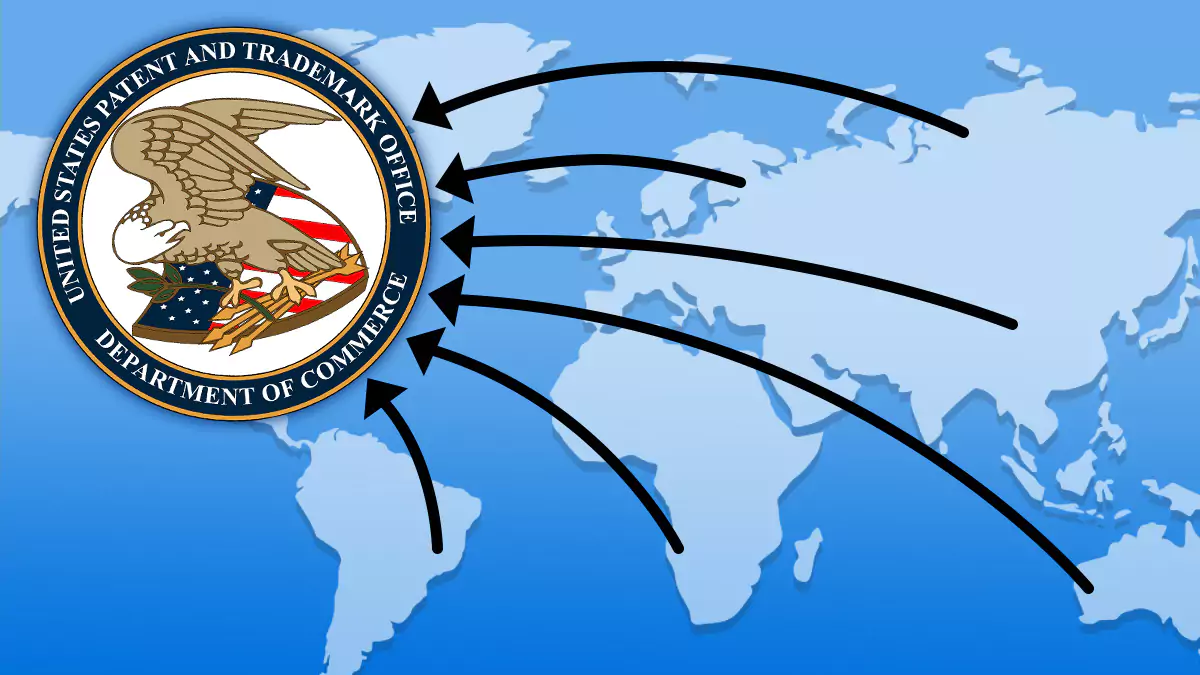
Navigating the U.S. trademark system can be challenging for those unfamiliar with its unique requirements and processes. Unlike many other jurisdictions, the United States employs a use-based system, mandates narrowly defined language in its identification of goods, and (in some circumstances) requires proof of actual use in commerce to obtain (and maintain) registration.
Consequently, even skilled foreign attorneys can hit roadblocks that can affect their client’s rights. Having an experienced U.S. attorney to assist with navigating the many pitfalls can save foreign attorneys and their clients significant amounts of time and money, and set the trademark owner up for success in the global marketplace.
If you have clients interested in protecting their brands in the U.S., the following tips will ensure that you are able to easily work with U.S. counsel and provide excellent service to your clients.
1. Properly identify the trademark owner
One of the most critical steps in filing a U.S. trademark application is properly identifying the trademark owner. The trademark owner on the application must be the legal entity that owns and controls the use of the trademark.
This can be an individual, a corporation, a partnership, or another type of legal entity. Mistakes in identifying the trademark owner can lead to delays in examination, USPTO refusals, or may even be the basis for invalidating the trademark registration.
In many cases, it may seem obvious who owns a trademark. However, it is less obvious if your client:
- has a complicated ownership structure
- holds its IP in multiple subsidiaries
- wants to file in the name of an individual
We encourage you to contact a U.S.-based attorney if there are any doubts regarding the trademark owner.
Case Study: Cancellation of a trademark due to incorrect owner information
Our firm successfully canceled a registration owned by a foreign organization that had a local law firm file the trademark in the law firm’s name “on its behalf.” That local law firm was not the owner of the mark and never controlled the use of the mark. In this instance, filing the application in the wrong owner name was a “non-correctable” error, and the resulting registration was void. This mistake could have been remedied by correctly identifying the owner at the outset.
Additionally, you should be mindful of recent changes to USPTO rules, which have mandated that all applicants provide their domicile address and e-mail address as a part of the application record.
Since this information is not required in many jurisdictions outside the U.S., it is often overlooked and results in easily avoided refusals.
- Domicile Address Requirement
A domicile address is the physical address of an individual’s permanent legal residence or a business entity’s principal place of business. This is the place where the applicant resides or conducts their main business activities. It is distinct from a mailing address, which might be a P.O. Box or a third-party service address. - E-mail Address Requirement
The email address requirement mandates that every trademark applicant and their attorney (if applicable) must provide a valid email address as part of their application or registration process.
2. Pick the correct filing basis
Every U.S. trademark application must claim a “filing basis.” U.S. applications are usually based on either:
- “Use in commerce” or Section 1(a) of the Lanham Act
- “Intent to use in commerce” or Section 1(b) of the Lanham Act
However, foreign trademark applicants receive special benefits under a treaty known as the Paris Convention. The Paris Convention (enacted under Section 44 of the Lanham Act) offers several benefits to foreign trademark applicants, including:
- Priority Claim if filed within 6 Months
Under Section 44(d), if a foreign applicant files a U.S. trademark application within six months of filing in their home country (which must be a member of the Paris Convention), they can claim the earlier filing date as their priority date in the U.S.
This gives them an advantage in potential disputes with other applicants who may have filed in the U.S. during that six-month period. - Basis for Registration Without U.S. Use Requirements
Section 44(e) allows foreign applicants to base their U.S. registration on a home country registration, even if they haven’t yet used the mark in U.S. commerce.
This is a significant benefit because it eliminates the need to establish use in commerce before filing, which is usually required for U.S. applicants.
The Paris Convention/Section 44 filings have some limitations. Both the trademark and owner must be identical to the home country filing and the goods/services must be the same or narrower. For example, if the applicant owns a home country registered mark for a design for shoes, it cannot file a word mark for shirts using that registered mark as the basis.
Typically, foreign trademark offices allow much more flexibility in what is applied for in their countries, so the U.S. tends to be more narrowly tailored. However, the applicant must have a bona fide intent to sell/provide all of the goods and services listed in its application at the time of filing, regardless of the basis.
3. Correctly identify the goods or services the client is offering
Trademark Offices in many foreign jurisdictions allow applicants to register marks with broadly worded identifications. In fact, some may even allow applicants to claim rights to entire class headings. However, the USPTO mandates that trademark applications include concise and clearly defined terms.
This requirement ensures that the scope of trademark protection is precise and unambiguous, reducing the risk of conflicts with existing trademarks and helping to clearly delineate the boundaries of trademark rights. Therefore, if your client attempts to file a U.S. application with language that is approved in another jurisdiction, it may still result in USPTO refusal.
Although ID refusals may be easily traversed, it is nevertheless advisable to meticulously review your client’s identification of goods/services prior to filing its application. One unintended consequence of applying for broadly worded goods/services is that your client may not actually use or have a bona fide intent to use its mark in connection with all of the goods identified in the application. This oversight could open the door for third parties to challenge your client’s application/registration.
4. Collect evidence of any U.S.-based use of the trademark
Unless basing an application on a foreign filing, the USPTO requires Applicants to submit evidence of use of the mark in commerce to obtain registration. This may occur with the initial application filing or after the USPTO issues a Notice of Allowance. While evidence-of-use requirements are not necessarily unique to the USPTO, the evidentiary standards that the USPTO sets for its specimens may create difficulties for even the most sophisticated attorneys.
It is important to understand that the USPTO distinguishes the types of specimens that are acceptable for goods from those that are acceptable for services. Commonly acceptable specimens for service marks include:
- advertising materials
- brochures
- websites that show the mark and reference the services
However, these same materials are often insufficient to show evidence of use for goods. Instead, acceptable specimens for goods might include:
- labels
- tags
- packaging
- photographs showing the trademark on the actual product
Additionally, the USPTO may have evidentiary requirements that are specific to the type of goods being sold. For example, an acceptable specimen for downloadable software might be a screenshot of the mark on the running software or one which shows how customers can complete the download.
In the event your client has difficulty producing acceptable evidence of use during the pre-registration process, we encourage you to contact a U.S.-based attorney. These issues can typically be resolved through good counseling. So long as your client has actual sales of its products or services to the U.S., it may conform its existing use to USPTO standards. Absent those sales, your client may still be able to obtain registration if it owns an application or registration for the same mark in another jurisdiction.
5. Ensure the client continues to use the trademark post-registration
The USPTO periodically requires an owner to submit evidence of use to maintain its trademark registration. This occurs:
- between the fifth and sixth year following the registration date
- between the ninth and tenth year following the registration date
- every ten years thereafter
This applies to all mark holders regardless of the filing basis claimed in the initial application. The USPTO’s evidentiary standards are roughly the same as detailed above. However, there is one important difference – the USPTO may conduct an audit of your client’s actual use.
The USPTO’s post-registration audit program is designed to ensure that registered trademarks are genuinely used in commerce for all the goods and services listed in the registration. This initiative helps maintain the integrity of the trademark register by identifying and addressing discrepancies between the registered goods/services and their actual use.
The audits are conducted at random. If selected, your client will be required to produce evidence of specific goods or services identified in its registration. In instances where your client cannot comply with the audit, the USPTO will require the deletion of the non-compliant goods/services from the registration. In severe cases, the entire registration could be canceled.
Therefore, it is critical to counsel your clients to:
- Only apply for goods/services that it is using or will use in the near future.
- Meticulously review your client’s identification and remove any non-used goods and services at any time evidence of use is required.
The more goods/services identified in the registration (See Tip No. 3 above), the greater the risk that your client may not be able to demonstrate use in case of an audit.
6. Consider engaging a U.S. trademark attorney before filing
Effective as of August 3, 2019, the USPTO has mandated that all foreign-domiciled trademark applicants, registrants, and parties to trademark proceedings must be represented by an attorney who is licensed to practice law in the United States.
If you choose to make a filing on your client’s behalf, please note that the USPTO will issue a refusal requiring you to appoint U.S. counsel. Ideally, you would appoint a U.S.-licensed attorney before submitting a trademark applications to the USPTO in order to mitigate some of the discussed risks.
Final thoughts
By following these tips and working closely with an experienced U.S. trademark attorney, foreign attorneys can navigate the complexities of the USPTO registration process more effectively, ensuring successful outcomes for their clients.
If your client needs to file a U.S. trademark, contact Gerben IP. Our experienced trademark attorneys can help you file and obtain a U.S. trademark registration for your client, regardless of your current location.

Josh Gerben, Esq.
Josh Gerben, Esq. is a nationally recognized trademark attorney and the founder of Gerben IP. Since launching the firm in 2008, he has overseen the registration of over 10,000 trademarks and handled over 1,500 trademark disputes. Josh's practice focuses on building and defending global trademark portfolios for clients. These clients include entrepreneurs, private equity-backed businesses, athletes, celebrities, and public companies. Frequently quoted by major media outlets like CNBC, CNN, The New York Times, and The Wall Street Journal, Josh is widely regarded as a leading authority in trademark law.
Do you need assistance with a trademark matter?
Contact an Attorney Today